Fertiliser for flowers and vegetables: how to pick the right feed for each plant
By FITTO Trade Desk · Last updated 29 October 2026
Choosing fertiliser for vegetables and flowers comes down to the three NPK numbers on the label. Leafy greens want nitrogen first, flowers and roses want more phosphorus and potassium, and fruiting vegetables want a balanced start, then potassium once they flower. In UAE soil, add organic matter and an iron supplement for yellowing leaves.
Key takeaways
- NPK stands for nitrogen, phosphorus and potassium; nitrogen drives leaves, phosphorus roots and flowers, potassium flowers and fruit.
- Leafy greens and herbs suit nitrogen-led feeds; flowers and roses suit bloom feeds higher in P and K.
- Tomatoes, peppers and cucumbers need a balanced feed at planting, then a potassium-rich feed from first flowers.
- Sandy, alkaline UAE soil holds few nutrients and locks up iron, so organic matter and iron supplements matter.
- Feed in the cooler growing months and go light in peak summer heat.
Give a tomato plant a lawn-style, high-nitrogen feed and you get a lush green bush with few fruit. Give lettuce a bloom feed and it grows slowly. The wrong fertiliser (سماد) wastes a season.
This guide matches feed type and NPK balance to flowers, fruiting vegetables and leafy greens in UAE conditions. It is written for home gardeners and the nurseries that advise them. At FITTO Garden, a wholesale planters and plant care supplier in the UAE, we stock flower feeds, vegetable feeds and soil supplements side by side.
What do the NPK numbers on fertiliser mean?
The three numbers are the percentage by weight of nitrogen (N), phosphorus (P) and potassium (K), always in that order. A 20-20-20 feed is balanced; a 10-30-20 feed leans towards phosphorus and potassium.
Each nutrient has a main job:
- Nitrogen (N): leaf and stem growth; too much gives leaves instead of flowers.
- Phosphorus (P): root development, flowering and seed set.
- Potassium (K): flower and fruit quality, and the plant's tolerance of heat and drought.
Good feeds also list trace elements such as iron, magnesium and zinc, which matter in UAE soil.
How do you choose fertiliser for vegetables and flowers by plant group?
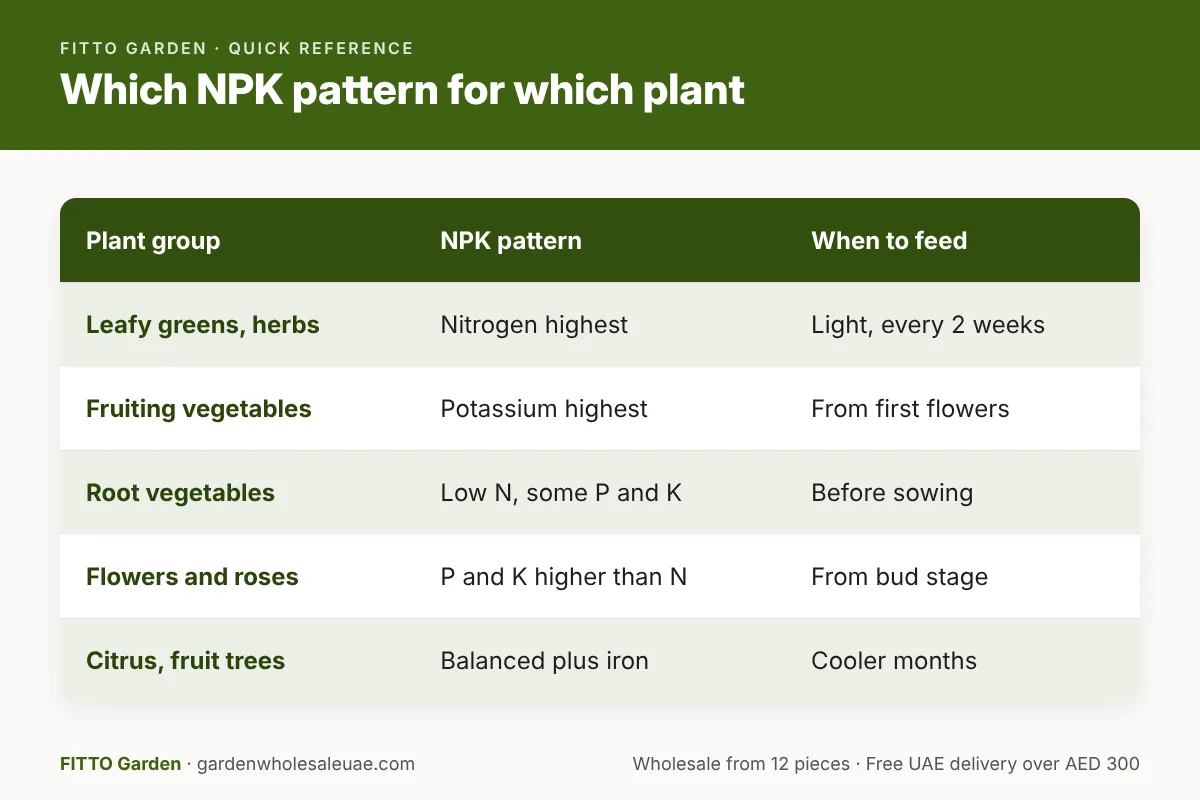
Match the feed to what you want the plant to produce: leaves, flowers or fruit. The table gives the pattern to look for on the label.
| Plant group | Examples | NPK pattern to look for | Feed type that suits |
|---|---|---|---|
| Leafy greens and herbs | Lettuce, rocket, spinach, coriander, mint | Nitrogen highest | Liquid or organic powder, little and often |
| Fruiting vegetables | Tomato, pepper, aubergine, cucumber | Balanced at planting, then potassium highest | Powder or granules at planting, liquid from flowering |
| Root vegetables | Carrot, radish, beetroot | Low nitrogen, moderate P and K | Mixed into soil before sowing |
| Flowering annuals | Petunia, marigold, vinca | Phosphorus and potassium higher than N | Bloom feed or slow-release granules |
| Roses and flowering shrubs | Roses, bougainvillea, jasmine | Bloom feed, plus iron if leaves yellow | Rose and flower feed in the growing season |
| Citrus and fruit trees | Lemon, lime, fig | Balanced, with trace elements | Granules or liquid, plus iron supplement |
These are general patterns; the dose and interval on each label always come first.
How do you feed flowers and roses?
Feed flowers with a bloom formula that is higher in phosphorus and potassium, starting when buds form. Too much nitrogen gives leaves instead of flowers.
For bedding annuals, mix slow-release granules into the potting mix at planting, then add a liquid bloom feed every two weeks or so once they flower. Feed roses through the cooler months, when they flower best in the UAE, and ease off in peak summer.
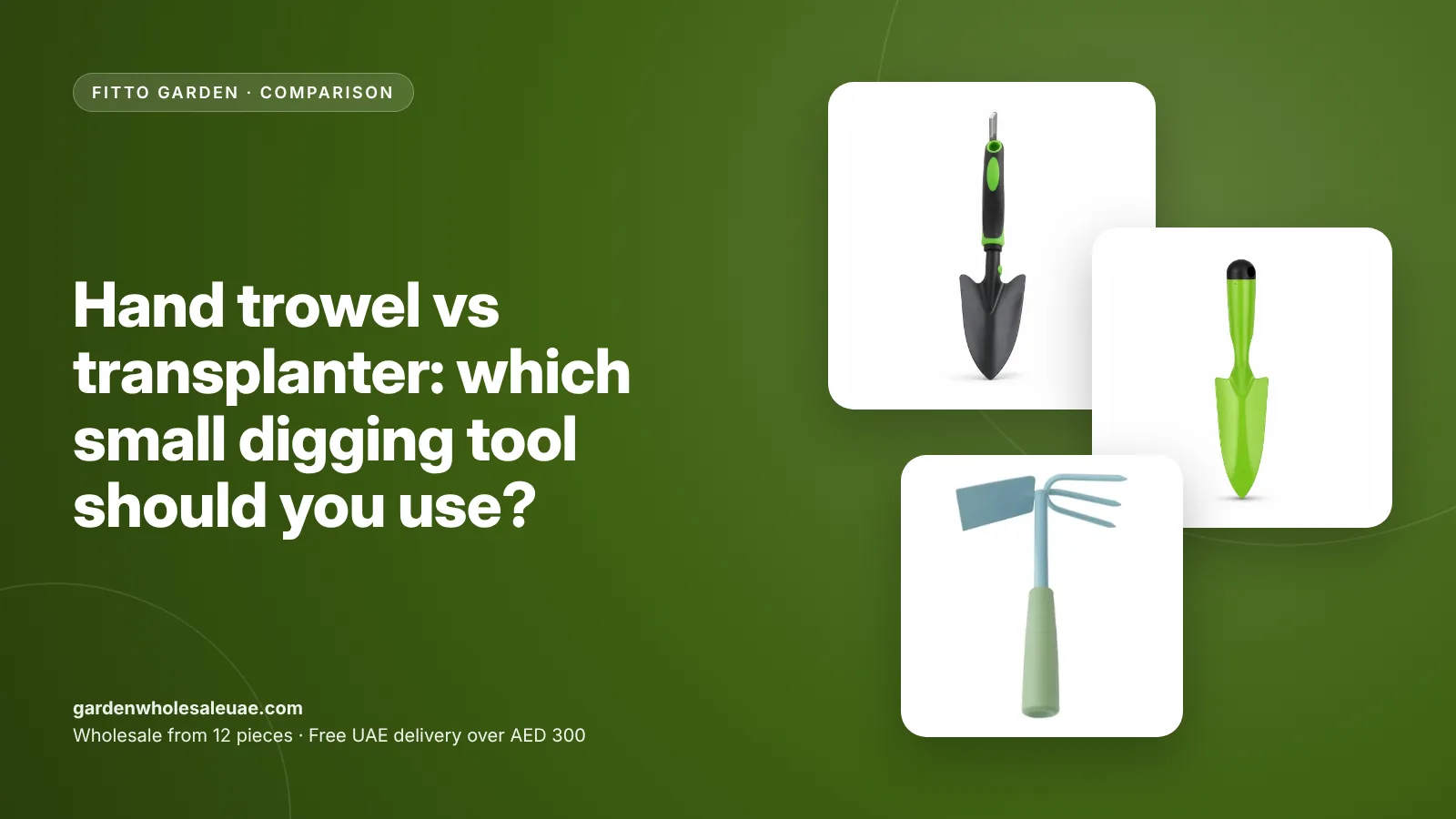
The rose and flower fertiliser spray, 750 ml is formulated for roses and flowering plants, including jasmine and bougainvillea. It comes ready to use in a trigger bottle, which suits balcony growers with a few pots.
Bougainvillea is the exception that catches people out. It flowers best when slightly hungry and dry, so heavy feeding often reduces blooms.
How do you feed fruiting vegetables and leafy greens?
Fruiting vegetables need a steady base feed at planting, then a potassium-rich boost once flowers appear. Leafy greens need light, regular nitrogen.
For tomatoes, peppers, aubergines and cucumbers, follow this pattern:
- Mix organic powder or slow-release granules into the bed or pot before planting, at the label dose.
- Water seedlings in and let them settle for two weeks before feeding again.
- From the first flowers, switch to a liquid feed with potassium as the highest number.
- Feed every one to two weeks while plants are fruiting, watering the soil first.
- Stop or reduce feeding if leaves curl down and darken, a common sign of too much nitrogen.
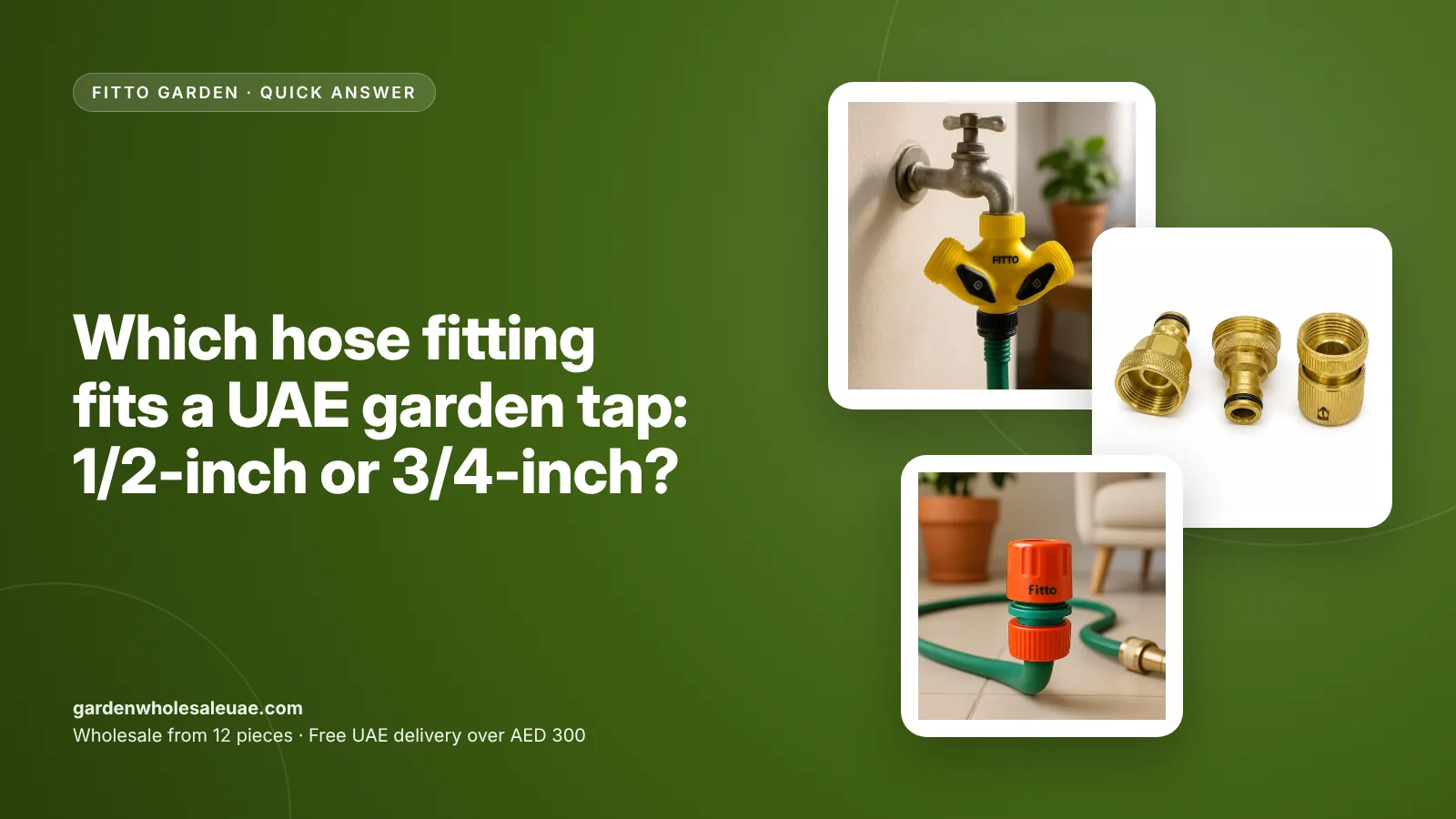
The biotic liquid fertiliser for vegetables and fruit plants, 1 L is made for this stage. It is diluted and watered onto the soil.
Leafy greens are harvested young and need less: a nitrogen-led liquid at half strength every two weeks is usually enough. Overfed basil and mint grow soft and can lose flavour.
Organic or synthetic fertiliser: which suits UAE gardens?
Use organic feeds to build the soil and synthetic or mineral feeds for precise, fast correction. Most UAE gardens benefit from both.
Organic fertilisers, such as compost, well-rotted manure and plant-based powders, release nutrients slowly and add organic matter that helps sandy soil hold water. Synthetic feeds act faster and have exact NPK figures, so they suit quick fixes and containers.
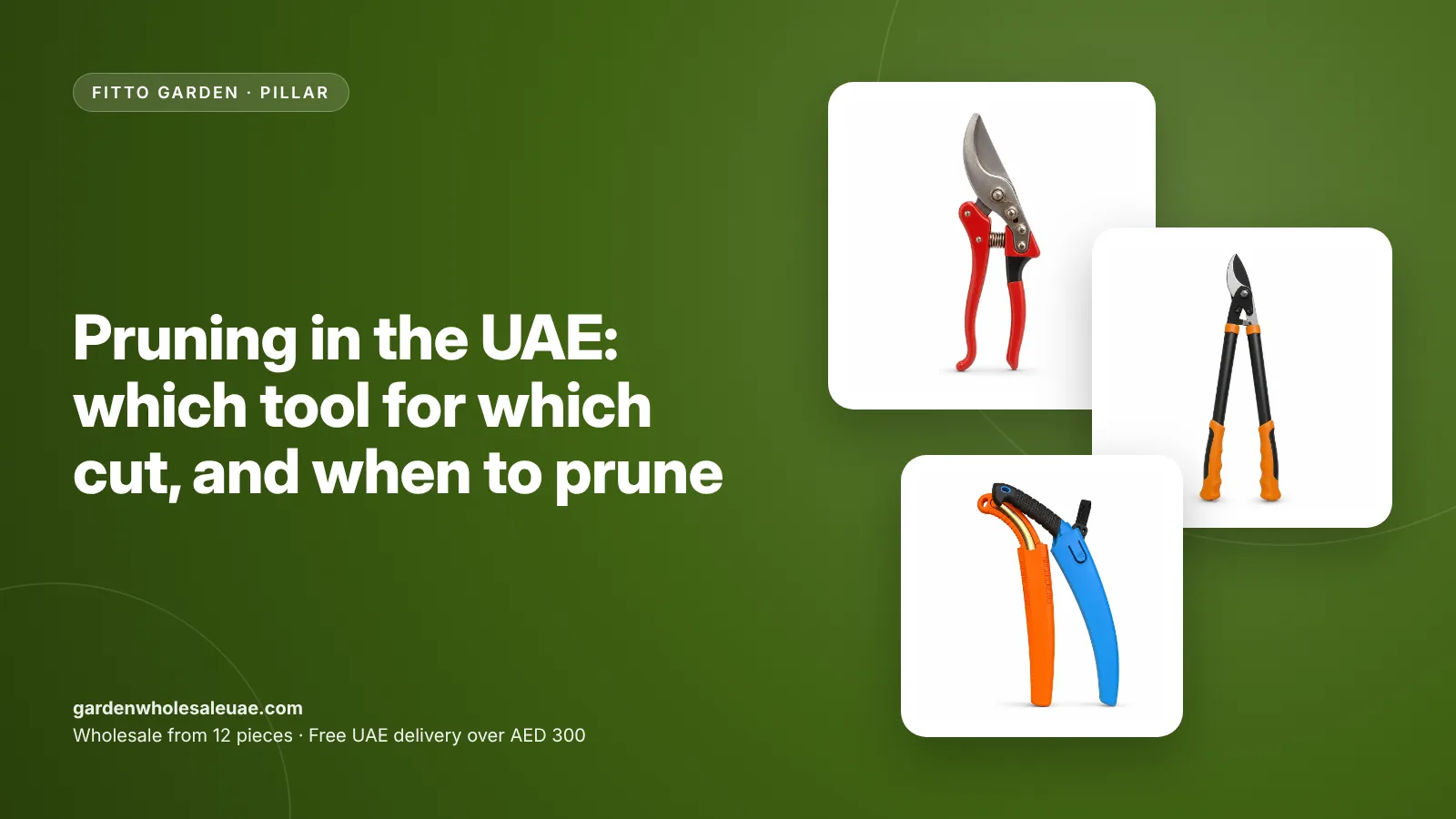
The natural powder plant fertiliser for vegetables, fruits and flowers is labelled 100% natural and is mixed into soil or water at the label dose. For a deeper look at release speeds, read our comparison of liquid vs granular fertiliser.
How do UAE soil and heat change your feeding?
Sandy, alkaline soil and summer heat mean you feed little and often, add organic matter and watch for iron deficiency.
- Sandy soil: holds few nutrients, so liquid feeds wash past roots quickly. Mix compost into beds and use slow-release feeds as a base.
- Alkaline soil and water: a high pH locks up iron. Yellow leaves with green veins on citrus, roses and gardenia are the classic sign.
- Heat: most vegetables and annual flowers grow from roughly October to April. In peak summer, many plants slow down, so feed lightly or pause, and never feed a wilting plant.
For yellowing leaves with green veins, the iron tonic plant supplement, 500 ml is applied to soil or leaves as its label directs. Our plant fertiliser and feeding guide covers labels, doses and trace elements in more depth, and the winter planting guide shows what to sow and when.
FITTO Trade Pick: One shelf, every plant group Nurseries can cover most customer questions with four products. Stock the rose and flower fertiliser spray, the 1 L biotic liquid fertiliser for vegetables, the natural powder fertiliser and the 500 ml iron tonic. Order a sample at the single-piece price, and we credit it on a bulk order of AED 2,000+ within 30 days.
The bottom line
Read the NPK numbers and match them to the harvest you want: nitrogen for leaves, phosphorus and potassium for flowers, and potassium for fruit. In UAE gardens, build sandy soil with organic matter, keep an iron supplement on hand and feed during the cooler growing months.
Browse our wholesale planters and plant care range, request a quote for your nursery or garden shop, or order a sample to test a feed first. Wholesale prices start from 12 pieces, delivery is free across all seven emirates over AED 300, and our team is on WhatsApp at +971 55 672 6947. FITTO Garden: fit for the way you grow.
FAQ
Can I use the same fertiliser for flowers and vegetables?+
Yes, a balanced or multi-purpose feed works for both, especially in mixed balcony pots. It will not be ideal for every plant, though. Fruiting vegetables crop better with extra potassium once they flower, and roses flower better with a bloom feed. Use one multi-purpose product as the base and add a targeted feed where results matter most.
What is the best NPK ratio for tomatoes?+
Start with a balanced feed mixed into the soil at planting. From the first flowers, switch to a feed where potassium is the highest of the three numbers, which supports flowering and fruit quality. Too much nitrogen at this stage gives large, leafy plants with fewer tomatoes, so avoid lawn feeds.
Why are my rose leaves turning yellow?+
In the UAE, the most common cause is iron deficiency from alkaline soil and water, which shows as yellow leaves with green veins. Overwatering, poor drainage and heat stress can also yellow leaves. Check drainage first, then apply a liquid iron supplement as its label directs and feed with a rose fertiliser.
How often should I feed vegetables in pots?+
Potted vegetables need feeding more often than those in beds, because regular watering washes nutrients out of the mix. A common pattern is slow-release granules at planting, then liquid feed every one to two weeks once plants flower. Always water first, and follow the product label for the exact dose.