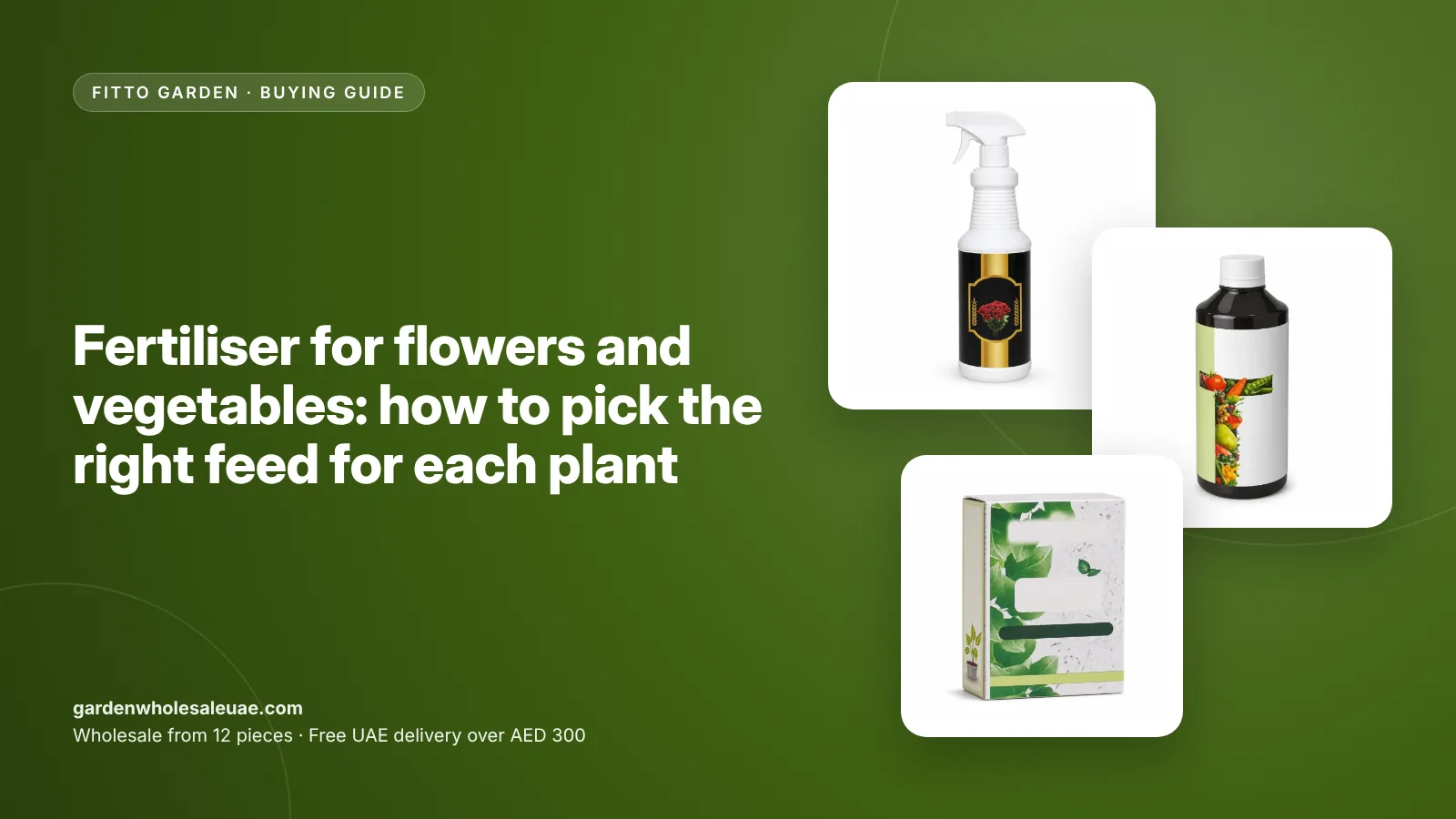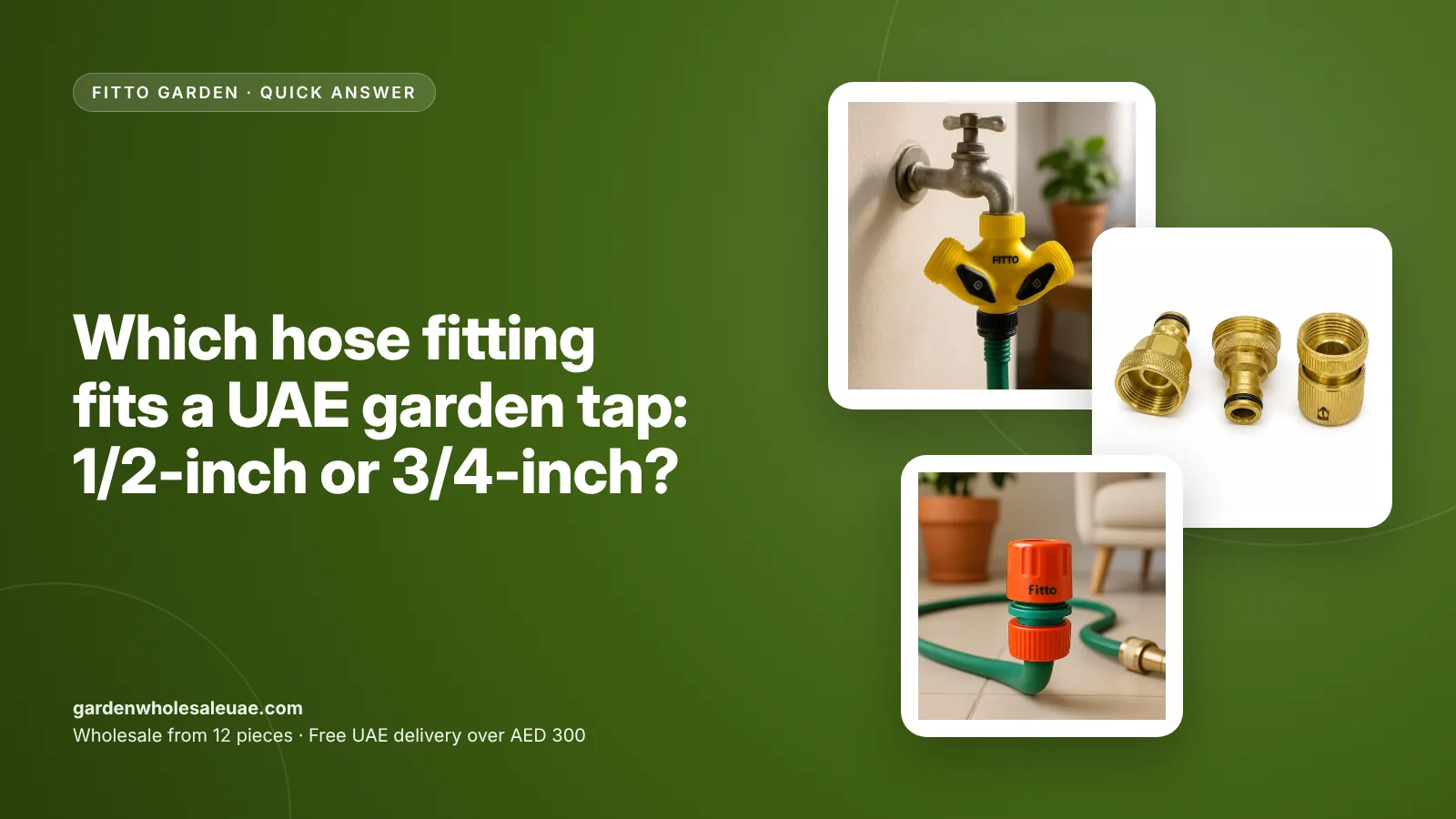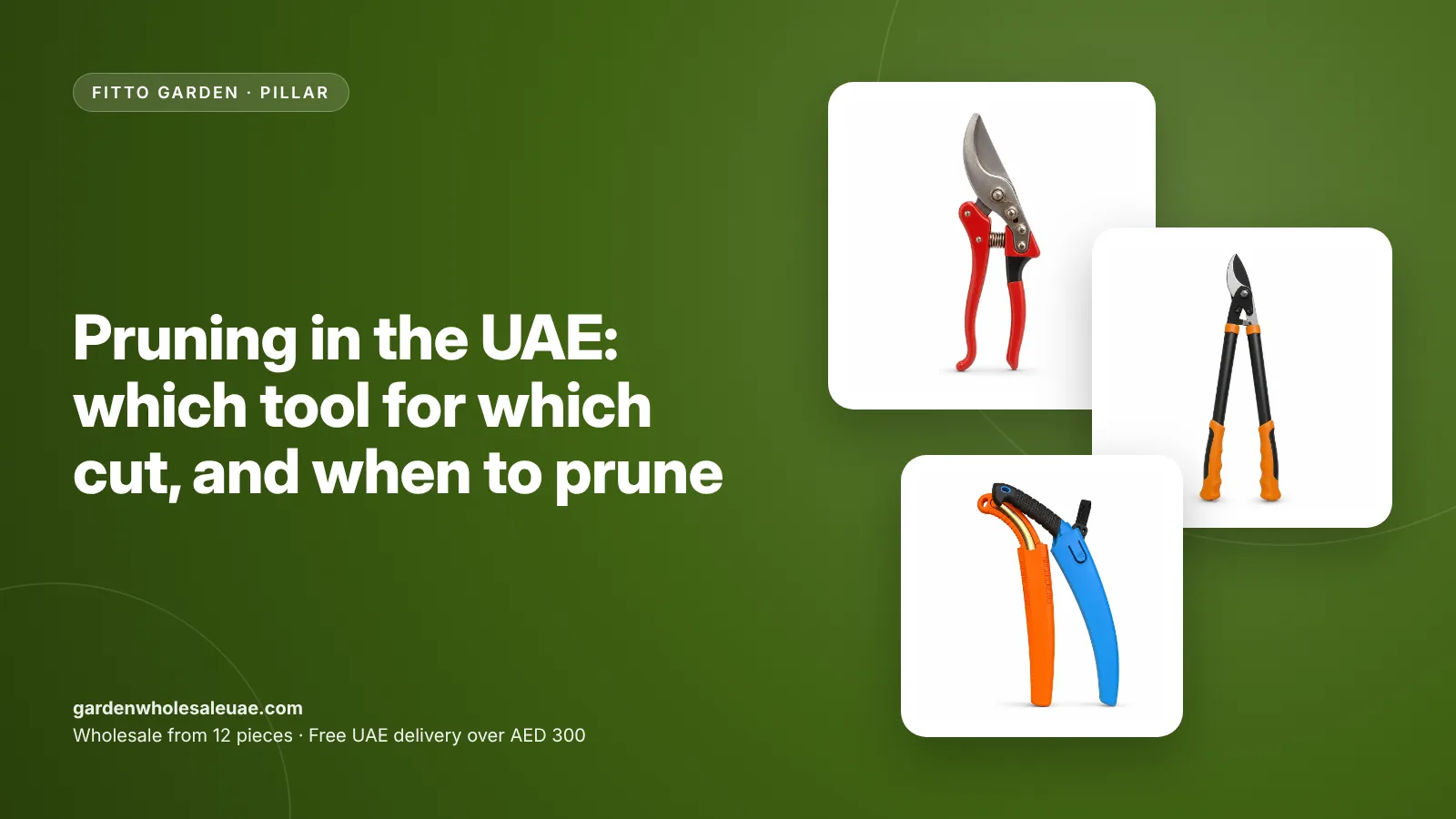
Hand trowel vs transplanter: which small digging tool should you use?
By FITTO Trade Desk · Last updated 29 October 2026
In the trowel vs transplanter choice, a hand trowel has a wide, scooped blade for moving soil, filling pots and digging broad planting holes. A transplanter has a narrow, deep blade for seedlings, bulbs and tight gaps between plants. Balcony pot growers can manage with a trowel alone; anyone planting beds, bulbs or seedlings benefits from owning both.
Key takeaways
- A hand trowel is the soil mover: typically 7-10 cm wide, best for pots, compost and wide holes.
- A transplanter is the precision tool: typically 4-6 cm wide, best for seedlings, bulbs and narrow holes.
- Depth markings on a transplanter help with bulbs; check the product photos, or add your own marks.
- In loose, sandy UAE soil, a trowel scoops faster; in compacted or stony ground, a transplanter cuts in more easily.
- The neck where blade meets handle is the usual failure point, so check it before you buy.
You buy one small digging tool, then find it either tears up neighbouring roots or takes ten scoops to fill a pot. That costs time, damaged seedlings and sometimes a second purchase.
This comparison settles which hand tool (مجرفة يدوية) suits which job, so home gardeners buy the right one first or know when to own both. At FITTO Garden, a wholesale gardening tools supplier in the UAE, we stock both blade types in single tools and sets.
What is the difference between a hand trowel and a transplanter?
The difference is blade width and depth. A hand trowel has a broad, shallow scoop that carries soil; a transplanter has a slim, deeply curved blade that slices a narrow hole.
A hand trowel looks like a small spade with curved sides that hold a good load of potting mix. A transplanter, or transplanting trowel, has a long, narrow blade that is almost a half-tube in cross-section. It slides into soil easily and lifts out a plug of earth without disturbing nearby roots.
Trowel vs transplanter: how do they compare?
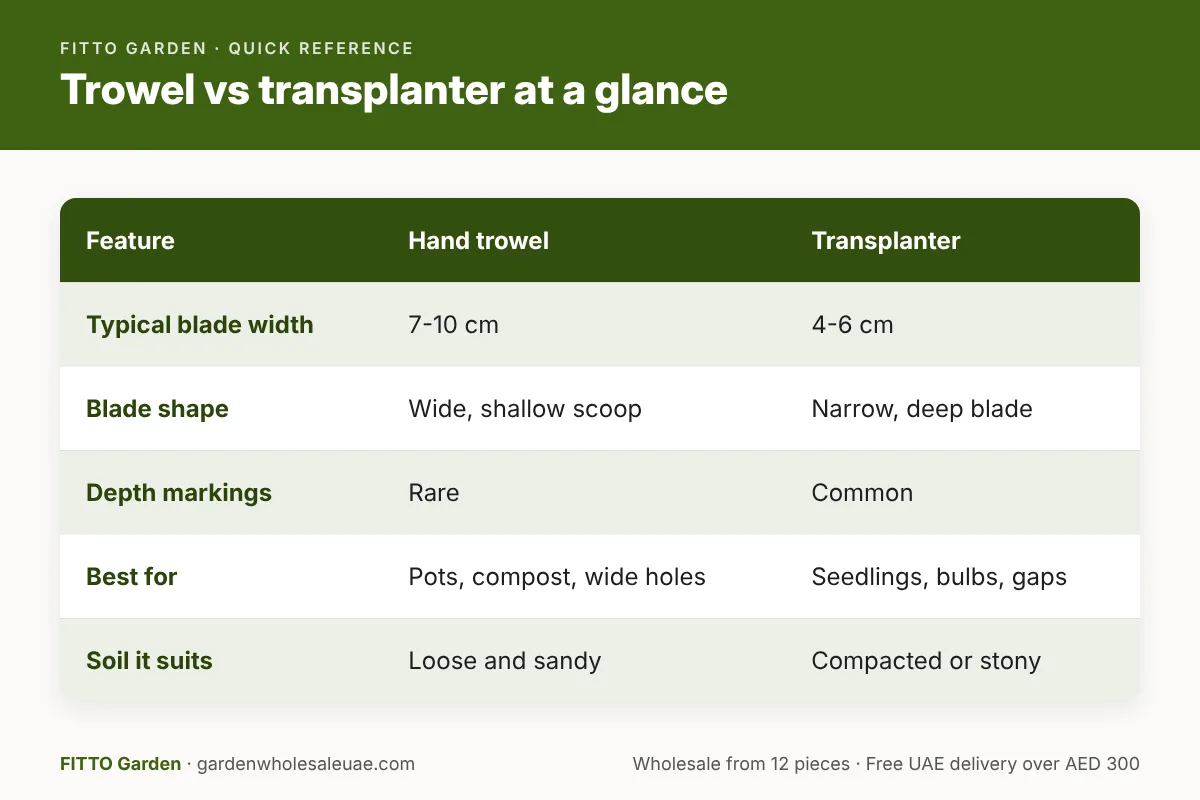
The trowel wins on soil volume and general use. The transplanter wins on precision, depth control and hard ground. The table sets out the main differences.
| Feature | Hand trowel | Transplanter |
|---|---|---|
| Typical blade width | 7-10 cm | 4-6 cm |
| Blade shape | Wide, shallow scoop | Narrow, deep, often pointed |
| Depth markings | Rare | Common, in cm or inches |
| Soil per scoop | High | Low |
| Best jobs | Filling pots, mixing compost, wide holes | Seedlings, bulbs, plugs, tight gaps |
| Soil it suits | Loose, sandy or potting mix | Compacted, stony or root-filled |
| Weak at | Precise holes between plants | Moving large amounts of soil |
Widths are typical ranges, not standards, so check the dimensions on each product page.
Which jobs suit a hand trowel?
Use a hand trowel whenever the job is about moving soil rather than placing a plant precisely. It is faster for pots and open beds.
Good trowel jobs include:
- Filling and topping up pots and planters with potting mix.
- Mixing compost or fertiliser into the top 10-15 cm of a bed.
- Digging holes for plants from 15-25 cm nursery pots.
- Scooping out old, tired mix when you repot.
For balcony and apartment growers who only work in pots, a trowel is often the only digging tool they need. Our guide to repotting a plant without shock shows the trowel at work.
The 30 cm hand trowel with a steel blade and soft-grip handle measures approx. 30 x 8 x 5 cm, with a scooped blade that narrows to a point. For a little more reach into deep planters, the 33 cm hand garden trowel adds length without the bulk of a long-handled tool.
Which jobs suit a transplanter?
Use a transplanter when you need a narrow hole at a known depth, or when you must work between plants without disturbing their roots.
Good transplanter jobs include:
- Planting seedlings and plug plants into beds and raised planters.
- Planting bulbs at the right depth.
- Weeding out tap-rooted weeds without lifting the soil around them.
- Working in compacted soil, around stones or beside drip lines, where a wide blade catches.
The 25 cm hand garden transplanter trowel has a pointed working blade for controlled placement in pots, borders and small beds. Its listing notes a 25 cm stated length and 27 cm in supplied data, so allow for that when planning storage.
Do you need depth markings for bulbs?
Depth markings save guesswork with bulbs and seeds, but they are not essential. A ruler, or your own marks on the handle, does the same job.
A common rule of thumb is to plant a bulb two to three times as deep as the bulb is tall. A 5 cm bulb therefore goes in roughly 10-15 cm deep, measured to the base of the bulb. Always check the planting depth on the bulb pack, because some types prefer shallower planting.
If your transplanter has no printed scale, mark 5, 10 and 15 cm from the tip with tape or a permanent marker. Check the product photos to see whether a model carries markings.
In the UAE, most bulb and seedling planting happens from roughly October to March. Our winter planting guide for the UAE covers what to plant and when.
How do you choose a well-made trowel or transplanter?
Check four things: the blade metal, the neck joint, the handle grip and the overall length. These decide how long the tool lasts and how comfortable it is.
- Blade metal. Stainless steel resists rust and suits humid coastal gardens. Carbon steel is strong but needs wiping and drying after use.
- Neck joint. The blade-to-handle joint takes the most strain when you lever soil, so avoid thin, crimped necks.
- Grip. Soft, non-slip grips help in hot, sweaty hands. Wooden handles feel natural but need occasional oiling in dry heat.
- Length. Tools of 25-33 cm suit most pots and beds. Choose the longer end for deep planters or for less bending.
Store both tools out of direct sun: blades left on a sunny balcony get hot enough to burn a bare hand.
Should you own both?
Yes, if you plant beds, bulbs or seedlings as well as pots. No, if you only repot houseplants or balcony planters.
Raised vegetable beds also benefit from a cultivator to loosen soil between rows, and a new villa garden is best started with a set rather than single tools. Our list of garden tools for a new villa shows which other hand tools are worth adding.
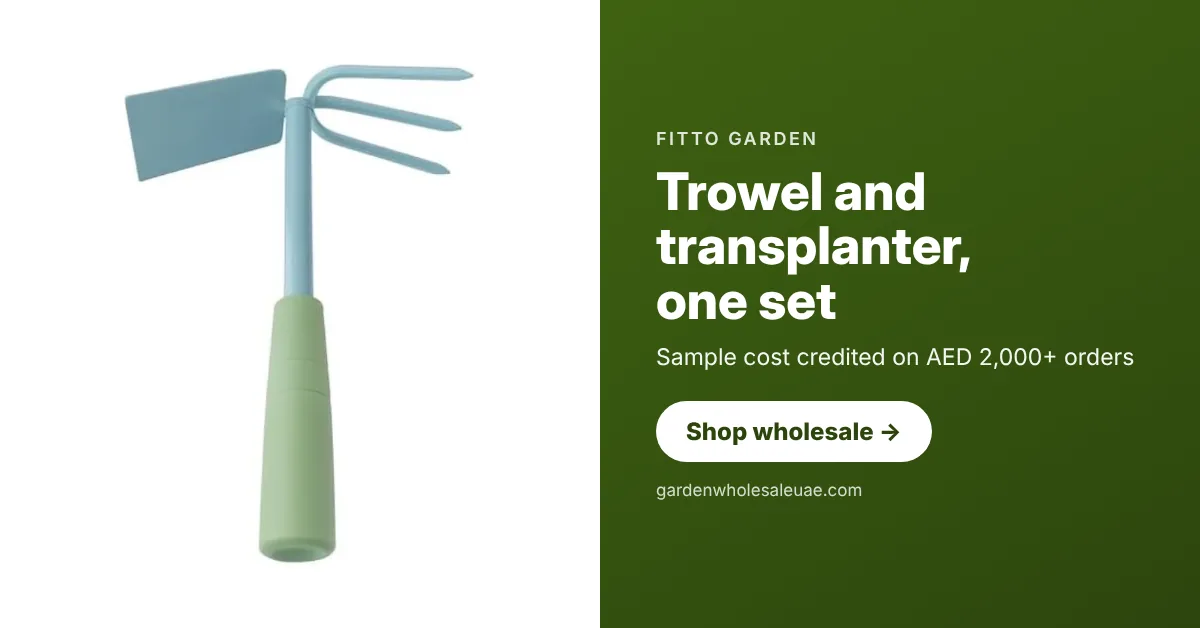
FITTO Trade Pick: Both blades in one set The ergonomic steel garden tool set pairs a hand trowel with a transplanter and a cultivator, all with rust-resistant steel heads and non-slip soft grips. Stock it beside the single 25 cm transplanter trowel so customers can buy the full set or just the missing tool. Order a sample at the single-piece price, and we credit it on a bulk order of AED 2,000+ within 30 days.
The bottom line
Choose a hand trowel for moving soil and filling pots, and a transplanter for seedlings, bulbs and narrow holes between plants. If you garden in both pots and beds, owning both saves time on every planting day.
Browse our wholesale gardening tools range and the planters and plant care range, request a quote for your shop or nursery, or order a sample to test a tool first. Wholesale prices start from 12 pieces, delivery is free across all seven emirates over AED 300, and our team is on WhatsApp at +971 55 672 6947. FITTO Garden: fit for the way you grow.
FAQ
Can a transplanter replace a hand trowel?+
Partly. A transplanter digs holes and plants seedlings well, but its narrow blade carries little soil, so filling pots or mixing compost takes many more scoops. If you mostly plant into beds, a transplanter can be your main tool. If you repot often, you will miss the wide scoop of a trowel.
Which tool is better for sandy UAE soil?+
In loose, sandy soil, a hand trowel is usually faster, because its wide, curved sides hold sand that would slide off a narrow blade. In compacted or stony areas, such as builder's fill around new villas, a transplanter cuts in more easily and still places seedlings at a precise depth.
What is a bulb planting tool, and do I need one?+
A bulb planter is a cylinder on a handle that removes a neat plug of soil, sized for one bulb. It is quick if you plant dozens of bulbs. For a few bulbs in pots or a small bed, a transplanter with depth marks does the same job and handles other tasks too.
How deep should I plant seedlings with a transplanter?+
Plant most seedlings at the same depth they sat in their tray or pot, with the top of the root plug level with the soil. Leggy tomato seedlings are an exception and can go deeper. Water in straight after planting, and plant in the early morning or evening to reduce heat stress.