How to sharpen pruning shears: clean, sharpen and oil them so they cut like new
By FITTO Trade Desk · Last updated 29 October 2026
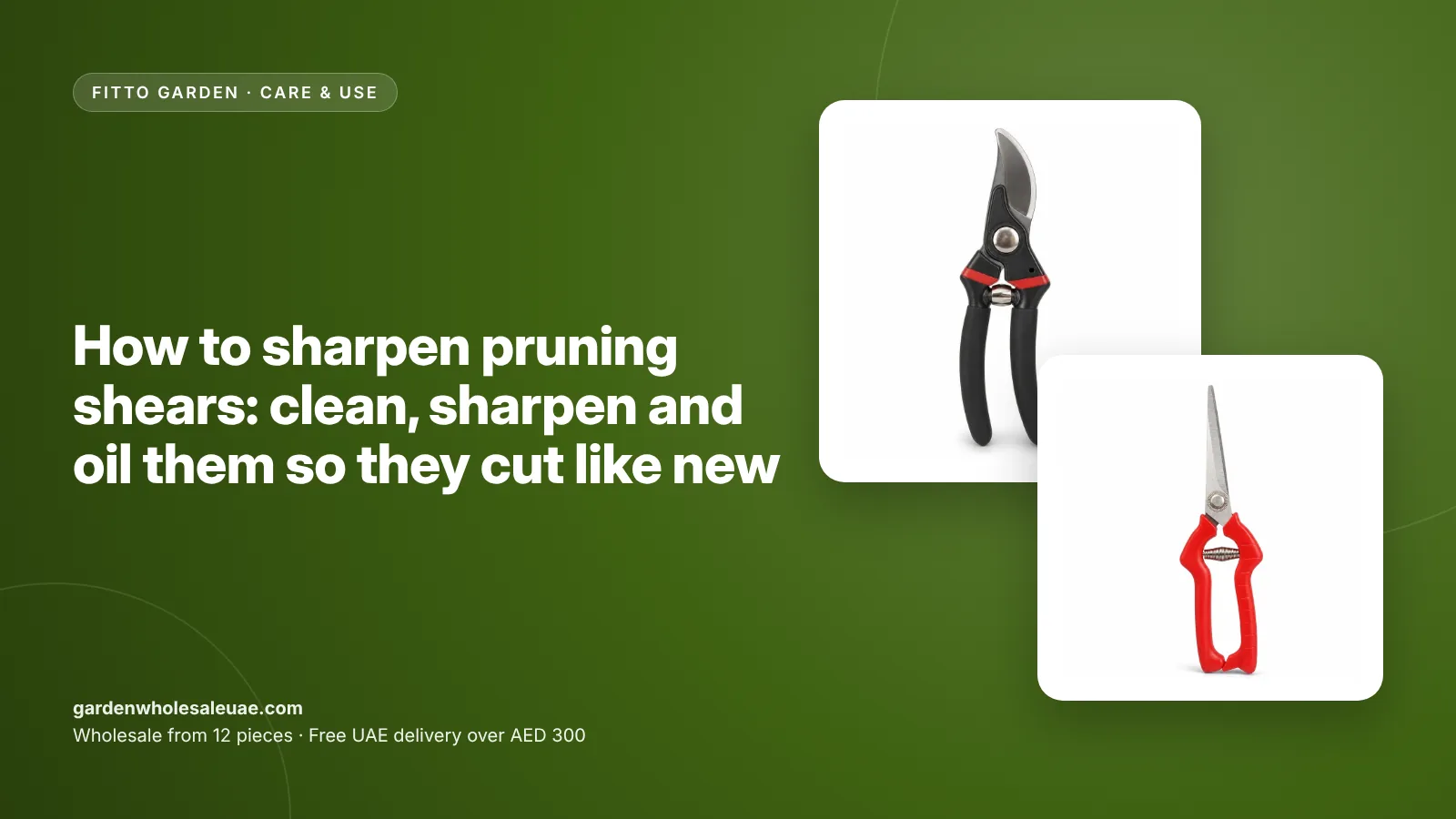
Here is how to sharpen pruning shears in about ten minutes. Scrub off sap with warm soapy water, then wipe the blades with 70% alcohol. Rub away rust with fine wire wool. File only the bevelled edge, from heel to tip, at its original angle. Remove the burr from the flat side, oil the pivot and test on paper.
Key takeaways
- Dull or sticky shears crush stems instead of slicing them, and crushed tissue heals slowly and invites disease.
- On bypass shears, sharpen only the bevelled cutting blade; keep the flat back of the blade flat.
- Wipe and dry after every use, sharpen when cuts start to tear, and store closed in shade.
Blunt secateurs cost more than they seem: ragged wounds on roses and hibiscus, slower crews and tired hands. In the UAE, sap from fig and frangipani gums the blades, sand dulls the edge and humid coastal summers start rust within days. This guide is for home gardeners and landscape crews who want pruning shears (مقص تقليم) that keep cutting cleanly for seasons.
At FITTO Garden, a wholesale gardening tools supplier in the UAE, we wrote this routine for the bypass, anvil and ratchet shears most gardeners own.
What do you need to clean and sharpen pruning shears?
You need six low-cost items, most already in a garden shed or kitchen.
| Item | What it does | Tip |
|---|---|---|
| Stiff brush and warm soapy water | Lifts soil, sand and fresh sap | An old toothbrush reaches the pivot |
| 70% isopropyl alcohol | Dissolves dried sap, disinfects blades | Wipe between diseased plants too |
| Fine wire wool or 220-grit sandpaper | Removes surface rust | Rub along the blade, not across it |
| Diamond file or fine whetstone | Restores the cutting edge | Small hand-held files are easiest |
| Light machine oil | Protects steel, frees the pivot | A drop is enough |
| Cloth and work gloves | Drying and safe handling | Blades get sharp quickly |
How do you clean sap and rust off pruning shears?
Wash off loose dirt, dissolve sap with alcohol, then rub rust away with fine wire wool.
- Open the shears fully and scrub both blades and the pivot with warm soapy water.
- Wipe hardened sap with a cloth soaked in 70% alcohol; leave it 30 seconds on stubborn spots.
- Rub any rust with fine wire wool or sandpaper, working along the blade.
- Dry completely, including the spring and the gap around the pivot bolt.
How do you sharpen pruning shears step by step?
File the bevelled edge only, at its existing angle, in smooth strokes from heel to tip. Most bypass blades need 10 to 20 strokes, not a full regrind.
- Find the bevel, the angled face along the cutting edge. On bypass shears it is on the outer side of the curved blade.
- Steady the shears on a table edge or in a vice padded with cloth.
- Lay the file on the bevel at its existing angle, often around 20-25 degrees.
- Push the file from heel to tip in one smooth stroke, lift and repeat; do not saw back and forth.
- Feel for a fine burr on the flat side, drawing a fingertip away from the edge.
- Lay the file flat on the back of the blade and make one or two light passes to remove the burr.
- Leave the hooked lower jaw of bypass shears alone; it holds the stem and does not cut.
Does sharpening differ for anvil and ratchet shears?
Yes. On anvil shears, sharpen the blade on both bevels and never file the flat anvil. The blade must meet the anvil evenly along its length.
Ratchet shears cut in stages, as our bypass, anvil and ratchet pruner comparison explains. Check whether your pair closes against an anvil or past a hook and sharpen it like that type. Brush sand out of the ratchet teeth too.
How do you oil, adjust and test the shears?
Oil the pivot and spring, check the blades close without a gap, then test on paper. A clean cut through paper means the edge is ready.
- Put one drop of oil on the pivot and spring, work the shears ten times and wipe off the excess.
- Wipe a thin film of oil over both blades to slow rust.
- Bypass blades should pass closely with no visible gap; tighten the pivot nut a fraction if they wobble.
- Cut a sheet of paper. A clean slice means you are done; tearing means a few more strokes.
How often should you clean and sharpen pruning shears?
Wipe after every use, deep-clean monthly in the growing season and sharpen when cuts start to tear.
| Task | Home gardener | Landscape crew |
|---|---|---|
| Wipe, dry and close | After every use | After every job |
| Alcohol wipe | Between diseased plants | Between sites |
| Deep clean and rust check | Monthly | Weekly |
| Sharpen | Every few months, or when cuts tear | Every one to two weeks |
| Oil pivot and blades | Monthly and after washing | Weekly |
These intervals are rules of thumb; woody cuts and palm fronds dull a blade faster than soft growth.
When should you replace pruning shears instead of sharpening?
Replace them when the blade is chipped deep, bent or cracked, or when the pivot will not hold tension.
A cracked handle or broken spring on a low-cost pair also points to replacement. Our pruning shears buying guide compares blade types and lengths for the next pair.
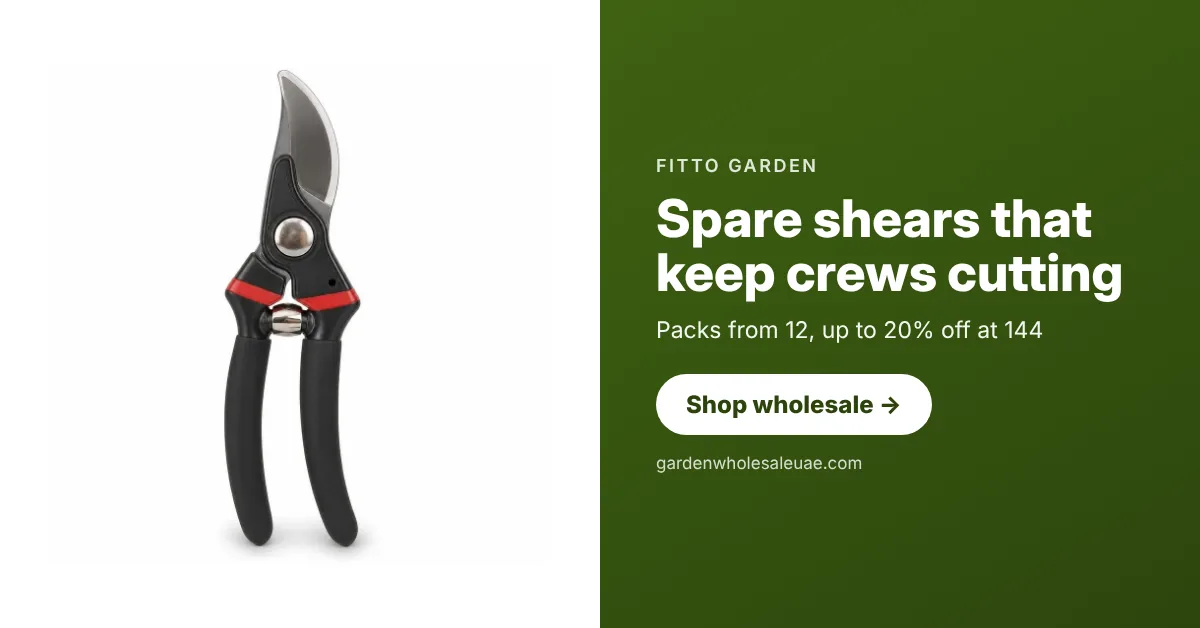
FITTO Trade Pick: Spare shears that keep crews cutting Keep a sharp spare in every van: the 8-inch spring-loaded bypass pruning shears for everyday cuts, the 10-inch bypass pruning shears for longer reach and textured-grip work gloves for safe sharpening. Packs start at 12 pieces, with up to 20% off per piece at 144.
The bottom line
Clean, sharpen and oil pruning shears in ten minutes: soap and alcohol for sap, wire wool for rust, a file on the bevel only, then oil and a paper test. Wipe after every use and store closed in shade.
Browse our wholesale gardening tools, see our landscaping tools in bulk guide, request a quote for crew or retail quantities, or order a sample to check a pair first. Delivery is free across all seven emirates over AED 300, and our team answers on WhatsApp at +971 55 672 6947. FITTO Garden: fit for the way you grow.
FAQ
Can I sharpen pruning shears without taking them apart?+
Yes. For routine sharpening, leave the shears assembled, open them fully and file the bevel from heel to tip. Take them apart only to reach a deep nick or replace a spring, and photograph the parts in order first so they go back together correctly.
What oil is best for pruning shears?+
A light machine oil or general-purpose tool oil works well. Use one drop on the pivot and a thin film on the steel, then wipe off the excess. Heavy grease attracts sand in UAE gardens, so keep the coating thin.
How do I remove rust from pruning shears?+
Light surface rust usually comes off with fine wire wool in a minute or two. For heavier rust, lay a cloth soaked in white vinegar on the blade for an hour, then rub with wire wool or 220-grit sandpaper, rinse, dry and oil.
Why do my pruning shears crush stems instead of cutting?+
The edge is dull, the blades have worked loose, or anvil shears are being used on soft green stems. Sharpen the bevel and tighten the pivot nut until the blades pass closely without binding. For live growth, bypass shears cut cleanest.