Pruning shears for UAE gardens: how to choose secateurs that cut clean and last
By FITTO Trade Desk · Last updated 29 October 2026
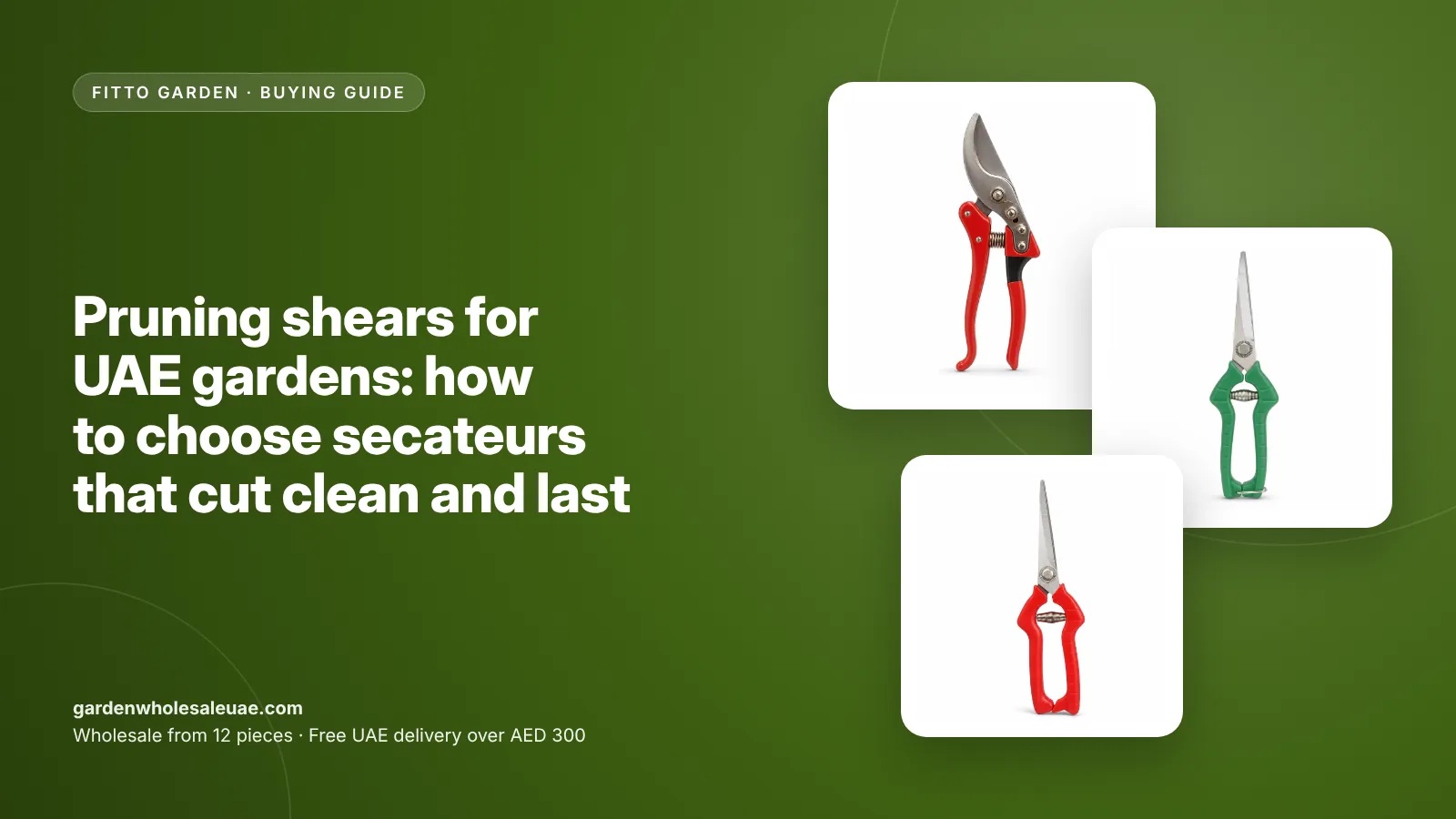
The best pruning shears for UAE gardens are bypass secateurs sized to the hand and the job. Choose 8-inch for everyday roses, shrubs and herbs, 8.5–10-inch for thicker woody stems and frond stalks, and a ratchet pruner for dead wood. Check for a firm spring, a one-thumb lock and a stated cut capacity, often around 18–20 mm.
Key takeaways
- Bypass blades suit live stems; save anvil and ratchet pruners for dry, dead wood.
- 8-inch secateurs fit most hands and jobs; 10-inch models give leverage but tire small hands faster.
- A strong spring, a one-thumb lock and non-slip grips matter more in daily use than the blade colour.
- Hand pruners stop at about 20 mm; use loppers or a pruning saw beyond that.
Blunt or badly sized pruning shears do slow damage. They crush stems instead of cutting them, so cut ends brown and shrubs struggle to recover in the heat. They also strain wrists on a long morning of hedge work, and cheap pivots work loose within weeks. This guide compares blade type, length, spring and lock, so you pick pruning shears that cut clean for roses, shrubs and palm fronds.
It is written for home gardeners, landscapers and garden retailers. At FITTO Garden, a wholesale gardening tools supplier in the UAE, we supply pruning shears (مقص تقليم) from 8-inch to 10-inch models, alongside ratchet pruners, loppers and saws.
Which blade type should you choose for pruning shears in the UAE?
Choose bypass pruning shears for most UAE garden work. Bypass blades pass each other like scissors, which leaves a clean cut on live, green stems such as roses, hibiscus, bougainvillea and citrus.
Anvil blades close onto a flat plate and can crush soft growth, so keep them for dry, dead wood. Ratchet pruners cut thicker dead stems in stages, which helps users with a weaker grip. Curved-blade shears hook the stem and stop it slipping out, which suits fruit branches and woody shrubs.
For the full side-by-side, read our comparison of bypass, anvil and ratchet pruners.
What length of pruning shears do you need?
An 8-inch pruning shear suits most hands and most jobs. Move up to 8.5 or 10 inches when you regularly cut thicker woody stems or have larger hands.
| Length | Best for | Hand size | Trade-off |
|---|---|---|---|
| 8-inch | Roses, herbs, shrubs, deadheading | Small to medium | Less leverage on thick stems |
| 8.5-inch | Mixed garden work, heavier shrubs | Medium | Slightly heavier |
| 9-inch | Fruit branches, woody shrubs | Medium to large | Less precise on fine stems |
| 10-inch | Thick stems, frond stalks, crews | Large | Tires small hands on long jobs |
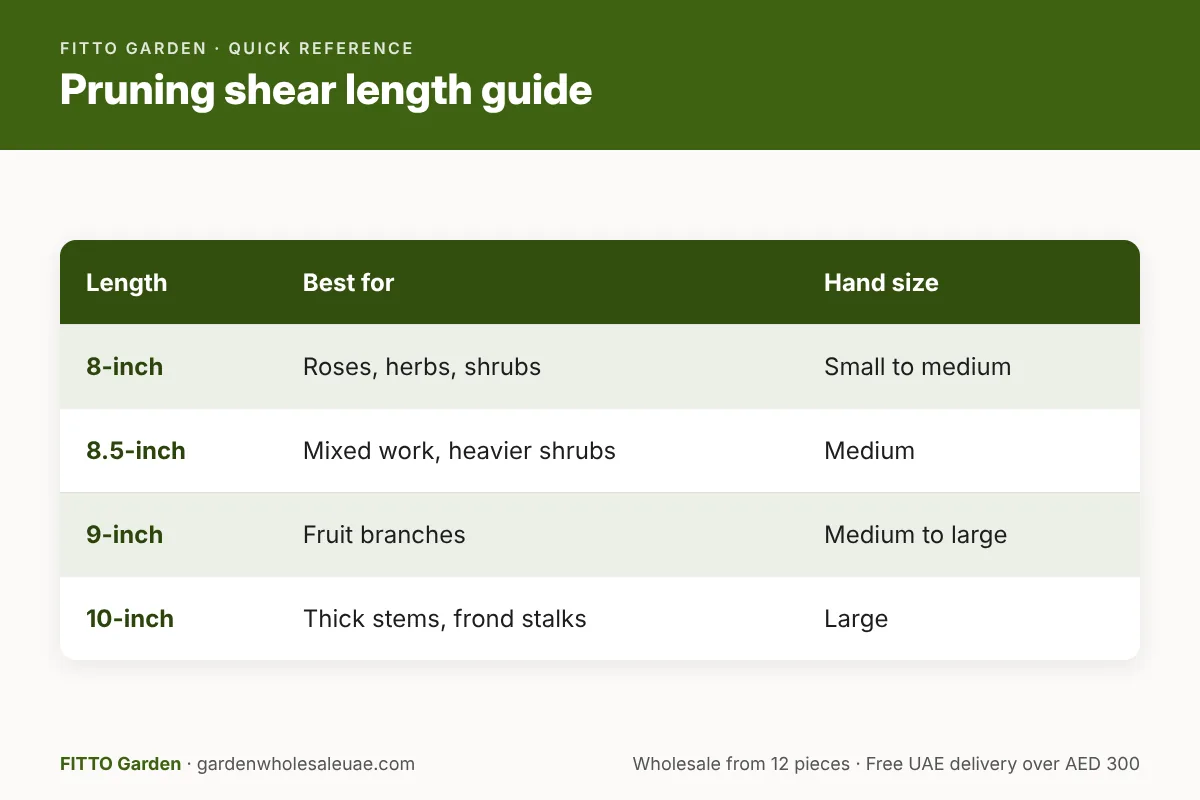
Inch sizes are trade labels: an "8-inch" pair can measure about 20–23 cm end to end, so check the length on each product page.
Which features make secateurs last?
Secateurs last when the pivot is firm, the spring is strong and the blade stays sharp.
Check these five points before you buy or stock a model:
- Pivot bolt: it should be adjustable, so you can tighten a blade that starts to gap.
- Spring: a coil or volute spring should snap the blades open without sticking.
- Lock: a lock you can work with one thumb saves time between cuts.
- Grips: non-slip rubber or textured handles stay secure with sweaty or gloved hands.
- Cut capacity: look for a stated capacity, such as 18 mm, and stay within it.
Blade steel matters too. Carbon steel holds a sharp edge well but rusts if left wet. Coated or stainless blades resist rust better, which helps in humid coastal gardens. Either way, wipe and dry the blades after use.
Which pruning shears suit roses, shrubs and palm fronds?
Use 8-inch bypass shears for roses and fine shrubs, 8.5–10-inch bypass shears for woody shrubs and young frond stalks, and a pruning saw for mature palm fronds.
- Roses: 8-inch bypass shears with a narrow tip reach into tight canes. Cut just above an outward-facing bud.
- Hibiscus and bougainvillea: 8-inch or 8.5-inch bypass shears. Wear gloves for bougainvillea thorns.
- Hedges: bypass shears for shaping individual stems; hedge shears for flat faces.
- Citrus and fruit trees: 9-inch or curved-blade shears for firm fruit branches.
- Palm fronds: 10-inch shears for young, thin frond stalks only. Mature frond bases need a pruning saw.
Most pruning in the UAE happens from October to April, when growth is fast. Avoid heavy pruning in peak summer, when fresh cuts add stress to plants already coping with heat.
How should garden retailers stock pruning shears?
Garden retailers should stock pruning shears in two or three lengths, with 8-inch bypass as the core line.
A practical range:
- Core: 8-inch bypass shears in two colours or price levels.
- Step-up: an 8.5-inch heavy-duty or 10-inch bypass shear for bigger jobs.
- Specialist: one ratchet pruner for dead wood and weaker grips.
- Next size up: a lopper and a pruning saw beside the shears, so customers with thicker branches buy the right tool.
Pruning shears sell all year, with a lift before the cool planting season in October. Hang one open sample pair at hand height, so customers can test the grip and spring before they buy. Landscaping crews usually buy one pair per worker plus spares; our guide to landscaping tools in bulk covers crew kits.
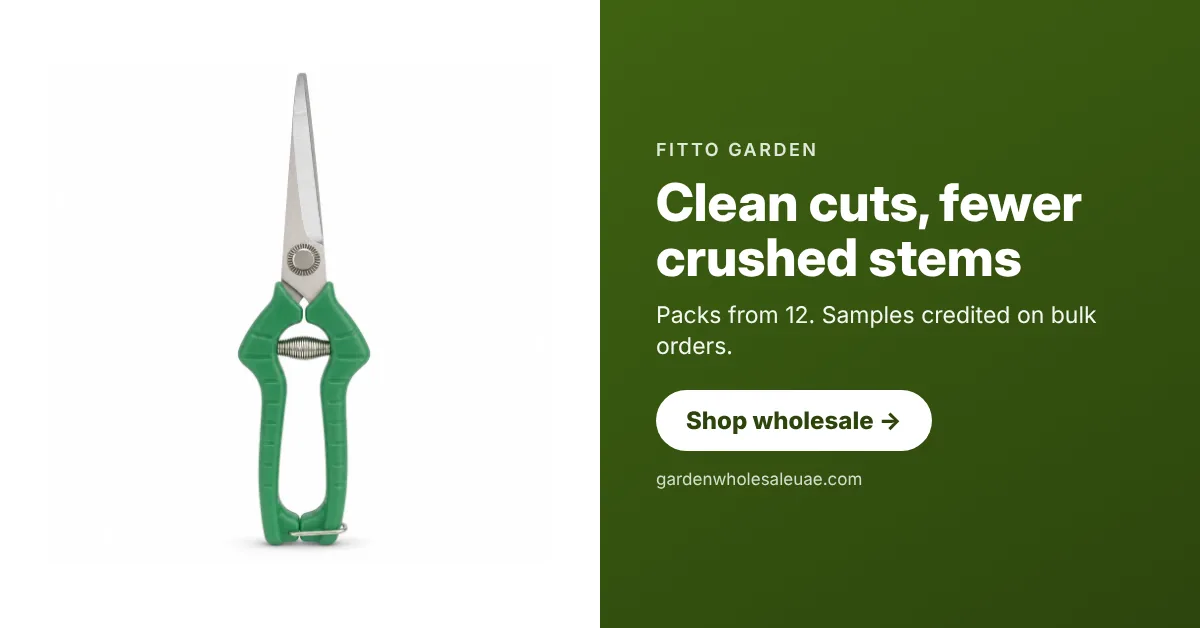
FITTO Trade Pick: Clean cuts, fewer crushed stems Our 8-inch bypass pruning shears with an 18 mm capacity, heavy-duty 8.5-inch secateurs and 10-inch bypass pruning shears cover fine, mixed and heavy work, in wholesale packs from 12 pieces. Want to feel the grip first? Order a sample at the single-piece price; we credit its cost on a bulk order of AED 2,000+ within 30 days.
How do you keep pruning shears sharp?
Keep pruning shears sharp by cleaning off sap after each use, oiling the pivot and touching up the edge before it goes blunt. A few minutes a week can save a new pair each season.
- Wipe sap and dirt from the blades with a damp cloth.
- Dry the blades fully, especially in humid months.
- Add a drop of light oil to the pivot and spring.
- Hone the bevelled edge with a fine file or sharpening stone when cuts start to tear.
- Tighten the pivot bolt if the blades begin to gap.
- Store the shears closed and locked, out of direct sun.
The bottom line
Choose bypass pruning shears for live stems, size them to the hand, and check the pivot, spring and lock before anything else. An 8-inch pair covers most gardens; add a 10-inch or ratchet model for heavier work, and a saw for mature fronds. For the full tool picture, see our gardening tools guide.
Stock secateurs that cut clean all season. Browse our wholesale gardening tools, request a quote for mixed cartons, order a sample first, or WhatsApp the Trade Desk on +971 55 672 6947. Delivery is free to all seven emirates on orders over AED 300. FITTO Garden: fit for the way you grow.
FAQ
What is the difference between pruning shears and secateurs?+
There is no real difference: secateurs is the usual British English term, while pruning shears is used more widely. Both mean one-handed cutters for stems up to about 20 mm. Garden scissors are lighter and suit herbs and flowers. Hedge shears are two-handed and cut flat faces on hedges.
What size pruning shears should I buy?+
Most gardeners should buy 8-inch pruning shears. They fit small and medium hands and handle roses, shrubs and herbs well. Choose 8.5 to 10 inches for larger hands or thicker woody stems. Hold the shears open before buying: if your fingers stretch to reach the handles, choose a smaller size.
Can pruning shears cut palm fronds?+
Pruning shears can cut young, thin palm frond stalks, ideally with a 10-inch bypass pair. Mature frond bases are too thick and fibrous for hand shears and can bend the blades or loosen the pivot. Use a pruning saw for those, and cut a little away from the trunk. Wear gloves, as many palms have sharp spines.
Why do my pruning shears crush stems instead of cutting them?+
Pruning shears crush stems when the blade is blunt, the pivot has worked loose or the stem is thicker than the tool's capacity. Clean off sap, then check whether the blades gap when closed and tighten the pivot bolt if they do. Hone the edge, and move thick stems to a lopper or saw.
How often should I sharpen pruning shears?+
Sharpen pruning shears when cuts start to tear, crush or leave strips of bark, which may be every few weeks for crews and once or twice a season at home. Clean off sap first, because sticky blades can feel blunt. Use a fine file or stone on the bevelled edge only, then oil the pivot.