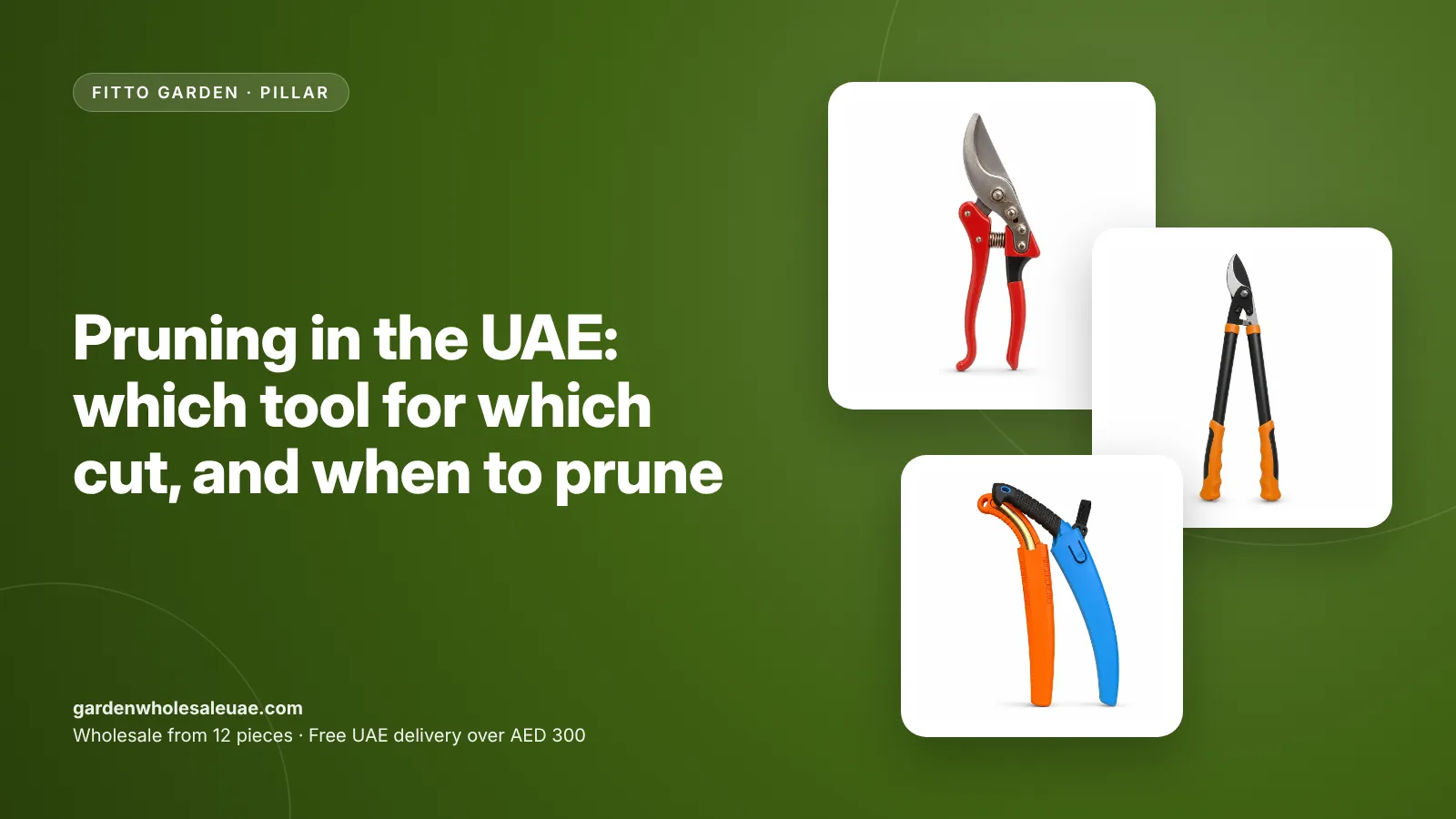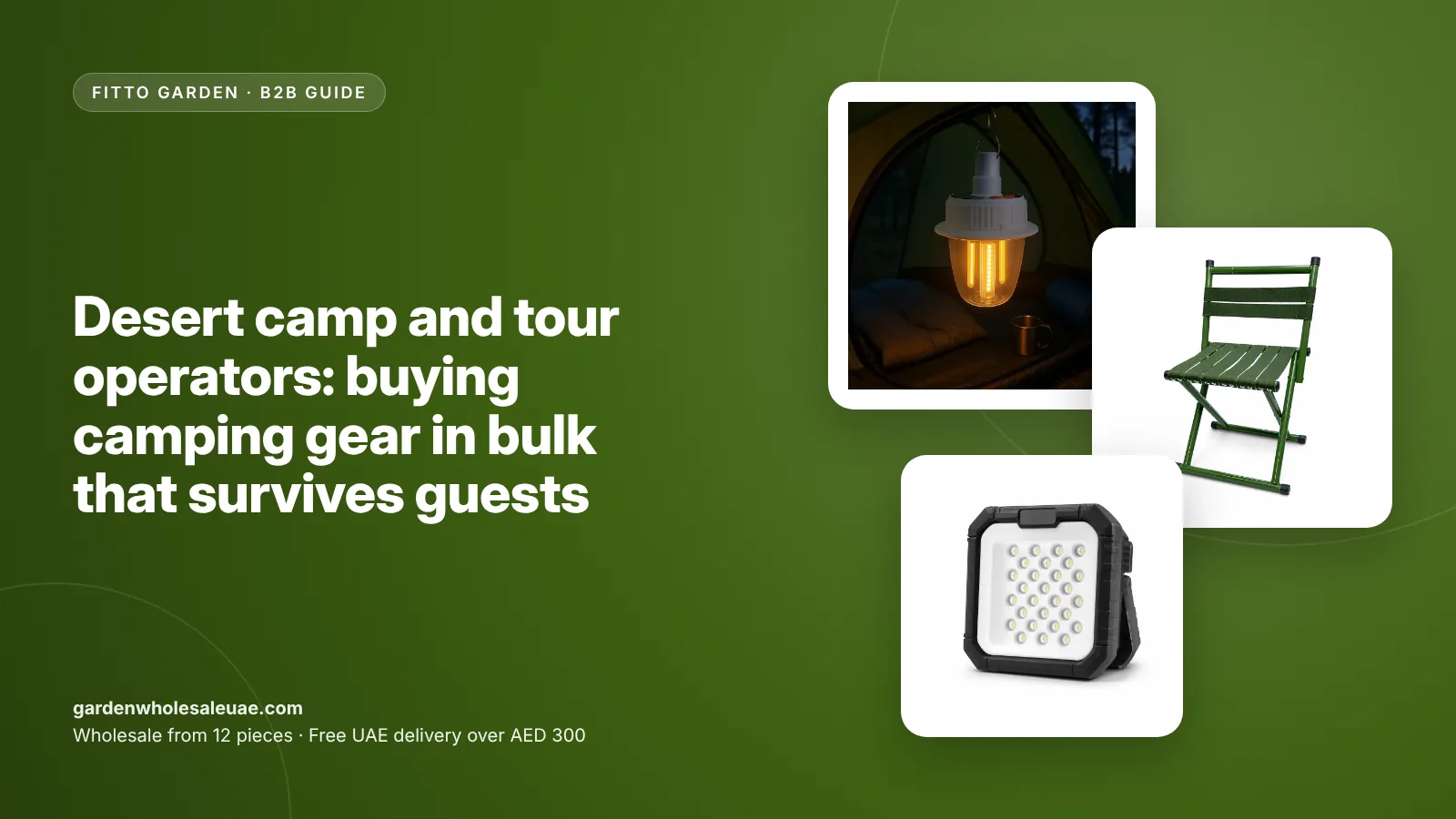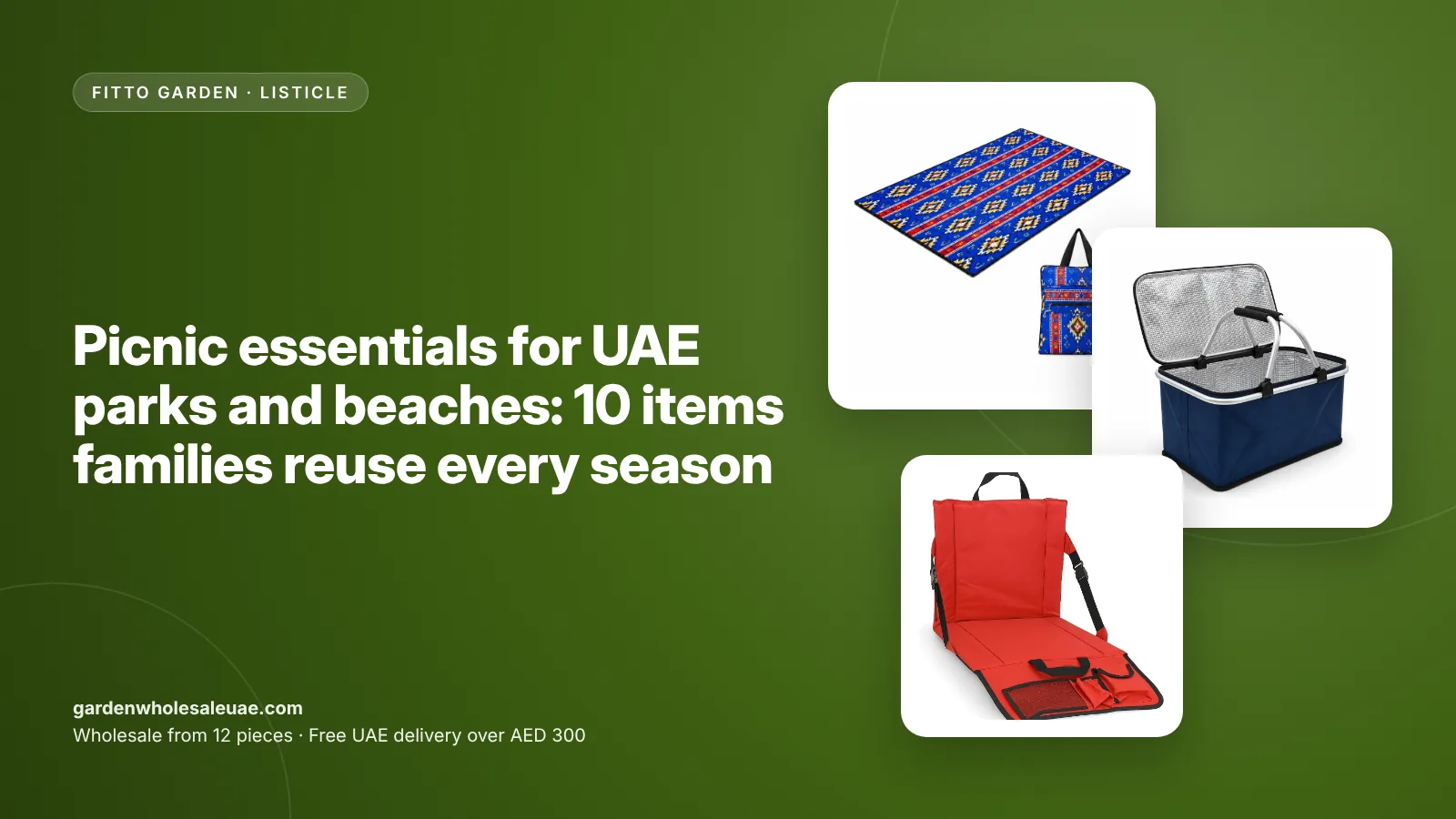
Solar vs rechargeable camping lanterns: which is more reliable on a UAE trip?
By FITTO Trade Desk · Last updated 29 October 2026
In the solar vs rechargeable lantern choice, a USB rechargeable lantern is more reliable for one to three nights in the UAE, because it starts every night from a full charge. Solar is best as a top-up: dust, haze, short winter days and small panels slow it down. The safest single buy is a lantern that charges both ways.
Key takeaways
- A full USB charge the night before is the most dependable power for a one or two night trip.
- Panels built into lanterns are small, so treat solar as a daytime top-up, not the main charger.
- Dust on the panel, hazy skies and low winter sun all reduce solar charging.
- Never charge a lantern on a car dashboard or bonnet in hot weather; heat shortens battery life.
- Tour camps run best on one rechargeable model, charged centrally from vehicle or generator power.
By the second night in the dunes, a lantern that relied on a day of sun on the tent roof glows like a candle. For tour operators, that means unhappy guests. This comparison settles which lantern to trust for each kind of UAE trip.
It is written for weekend campers, desert tour operators and outdoor retailers choosing between a solar lantern (فانوس طاقة شمسية) and a USB rechargeable one. At FITTO Garden, a wholesale camping and outdoor gear supplier in the UAE, we stock both types, plus lanterns that charge either way.
What is the difference between a solar and a rechargeable lantern?
Both usually run on a built-in rechargeable battery; the difference is how that battery is refilled. A rechargeable lantern charges from a USB cable, while a solar lantern adds a panel that charges it in daylight.
Most camping lanterns now use a lithium-ion battery. Many sold as "solar" also have a USB port, so the real question is whether the panel adds enough charge to matter. Check the product page for both charging options.
Solar vs rechargeable lantern: how do they compare?
USB charging wins on speed and predictability; solar wins on independence from sockets. The table sets out the trade-offs that matter in the field.
| Factor | USB rechargeable | Solar with USB backup |
|---|---|---|
| Starts the trip full | Yes, if charged the night before | Yes, if also charged by USB |
| Charging speed | Usually a few hours from a socket | Slow; often more than one sunny day for a full charge |
| Light on night three without power | Only with a power bank or car charger | Partly, if the panel gets several hours of direct sun daily |
| Effect of dust and haze | None | Output falls as dust settles on the panel |
| Heat exposure while charging | Low, charges in the shade | Higher, because it must sit in direct sun |
| Running cost | A tiny amount of electricity | None when charging from the sun |
| Best for | One or two nights, tour camps with power | Longer trips, gardens, home emergency kits |
How well does solar charging work in UAE haze and winter sun?
UAE sunshine is strong, but hazy days, blowing dust and short winter days cut what a small panel collects. Expect useful top-ups, not guaranteed full charges.
The camping season runs from about November to March. In December, Dubai gets only about 10.5 hours of daylight, and the sun sits lower in the sky. Dusty, hazy days are common in the desert, and a thin film of sand on the panel blocks part of the light. To get the most from solar:
- Charge fully by USB at home first, so the sun only has to replace what you use.
- Angle the panel towards the sun; in the UAE that means facing south, tilted upwards.
- Wipe the panel with a soft, dry cloth each morning to remove sand and dew marks.
- Keep the lantern switched off while it charges.
- In warm weather, avoid hot surfaces such as car bonnets and dark rocks; give it shade around the body and air underneath.
Heat is the hidden risk. Most lithium-ion cells are designed to charge at up to about 45 °C, and a lantern sitting in summer sun can pass that easily. That is why solar charging suits the cool months far better than June to September.
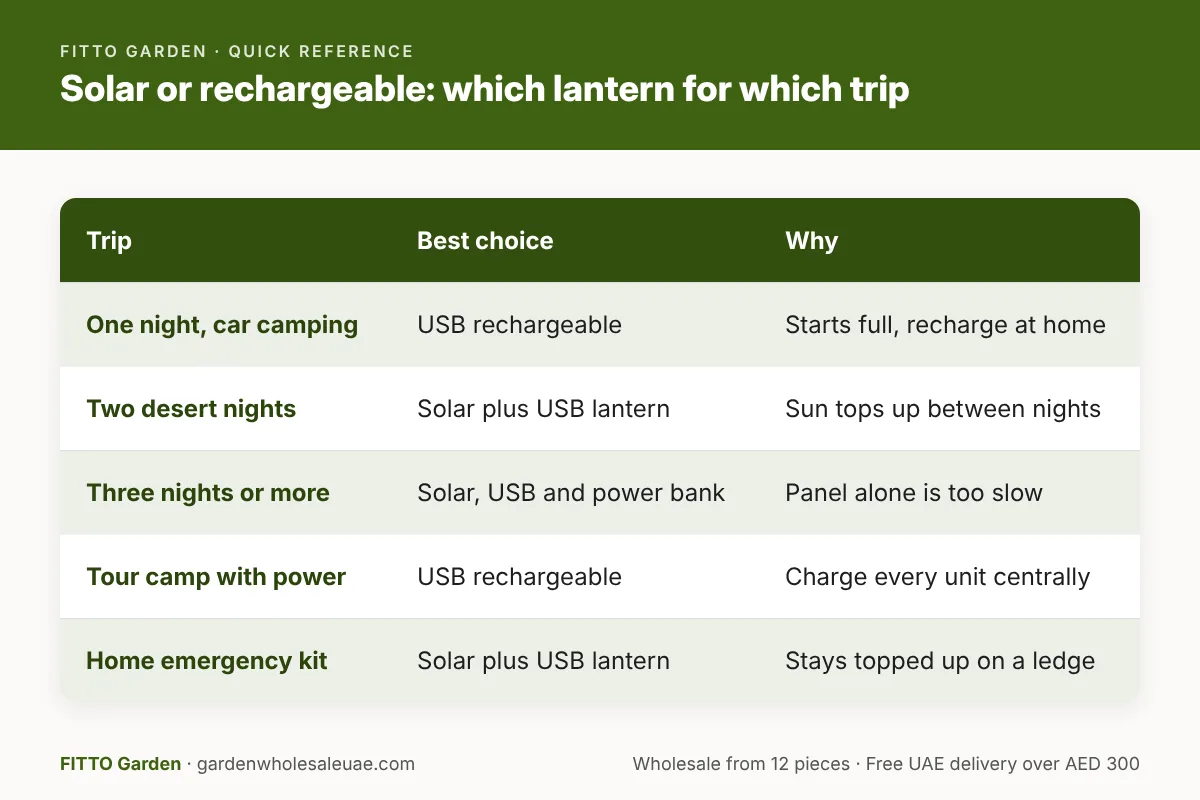
Which lasts longer on a 1 to 3 night trip?
For one night, any fully charged lantern is enough; by night three, dual charging or a power bank decides whether you still have light. Plan by the number of nights, not by peak brightness.
| Trip type | Best choice | Why |
|---|---|---|
| One night, car camping or beach | USB rechargeable | Starts full; recharge at home |
| Two nights in the desert | Solar plus USB lantern | Panel tops up between nights |
| Three nights or more, remote wadi | Solar plus USB, and a power bank | A small panel alone cannot keep pace |
| Tour camp with generator or vehicles | USB rechargeable | Charge every unit centrally each day |
| Villa garden, majlis tent, emergency kit | Solar plus USB lantern | Stays topped up on a sunny ledge |
Low mode is your biggest runtime saver, so use high only for cooking. A headlamp per person keeps the lantern on its hook; our headlamp buying guide covers runtime and fit.
Is solar or rechargeable cheaper over a season?
Both cost almost nothing to run, so the real cost is a lantern that fails early. Spend on build quality, sealing and a battery you can charge two ways, rather than on the power type alone.
USB charging uses negligible electricity, and solar saves even that, but the panel is one more part that can crack if dropped. Lanterns on disposable AA or AAA batteries cost money every trip.
Battery care matters more than charging type. Lithium batteries lose capacity faster when stored hot or flat. Between seasons, store lanterns at roughly half charge in a cool cupboard, and top them up every few months, as a general rule. Sealing decides lifespan too; our camping lantern buying guide explains IPX4 and IP65 ratings.
Which should tour operators and retailers stock?
Tour operators should standardise on one rechargeable model charged centrally; retailers should lead with a dual-charging lantern and add a solar option for gardens and emergency kits.
One model means one cable and one charging routine. Number each lantern, charge the set from vehicle or generator power by day, and keep two charged spares in the support car. For the rest of a cold-night kit, see our UAE camping season packing guide.
For a shop, the clearest shelf message is honest: "Charge by USB before the trip; the sun keeps it topped up." It cuts returns from buyers who expected solar alone to last all night.
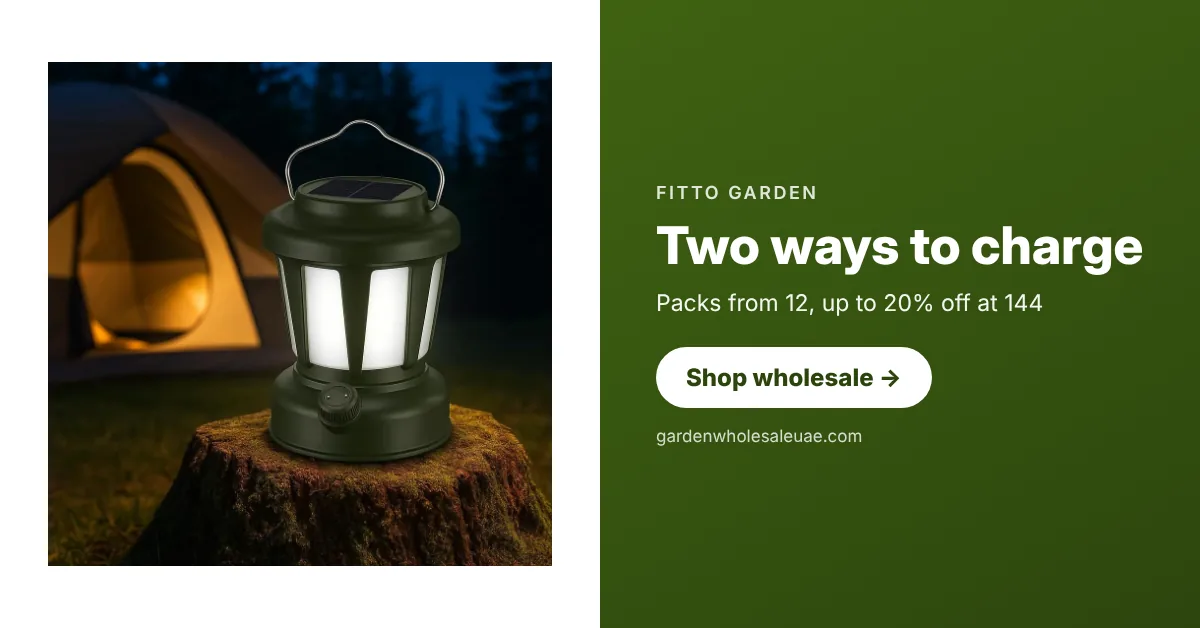
FITTO Trade Pick: Two ways to charge, one reliable light Range the rechargeable IPX4 camping lantern with solar charging and 3 light modes as your all-rounder, and the IP65 solar camping lantern 2-pack with USB charging for families. For camp kitchens, the rechargeable LED work light with solar panel gives up to 1000 lumens. Packs start at 12 pieces, with up to 20% lower cost per piece on 144.
The bottom line
For a weekend in the UAE desert or on the beach, a USB rechargeable lantern charged the night before is the most reliable light. Solar earns its place as a top-up on longer trips and in emergency kits, so a lantern that charges both ways is the safest single buy.
Browse our wholesale camping and outdoor gear, request a quote for tour-camp quantities or order a sample to time the charging yourself. Delivery is free across all seven emirates over AED 300, and our team answers on WhatsApp at +971 55 672 6947. FITTO Garden: fit for the way you grow.
FAQ
Can I charge a camping lantern from my car?+
Yes, if the lantern has a USB port. Use a car USB adapter while you drive, since some cars cut USB power when the ignition is off. Do not leave lanterns charging in a parked car in warm weather, because cabin heat shortens lithium battery life and can damage the lantern.
How long does a solar lantern take to charge?+
It depends on panel size, battery capacity and sunlight. As a rule of thumb, small built-in panels often need more than one sunny day to refill an empty battery, while USB charging usually takes a few hours. Check the manual for the figures that apply to your model.
Do solar lanterns work in the UAE winter?+
They work well for top-ups. Winter sun is strong enough, but December days give only about 10.5 hours of daylight and the sun sits lower. Start each trip with a full USB charge, then use the panel to replace what you use each evening. The cooler weather is also kinder to the battery while it charges.
Which type is better for a home emergency kit?+
A lantern that charges by solar and USB suits an emergency kit best. Keep it near a bright window so it stays topped up, give it a full USB charge every few months, and store it with a headlamp. Test both each May, before the hottest months.