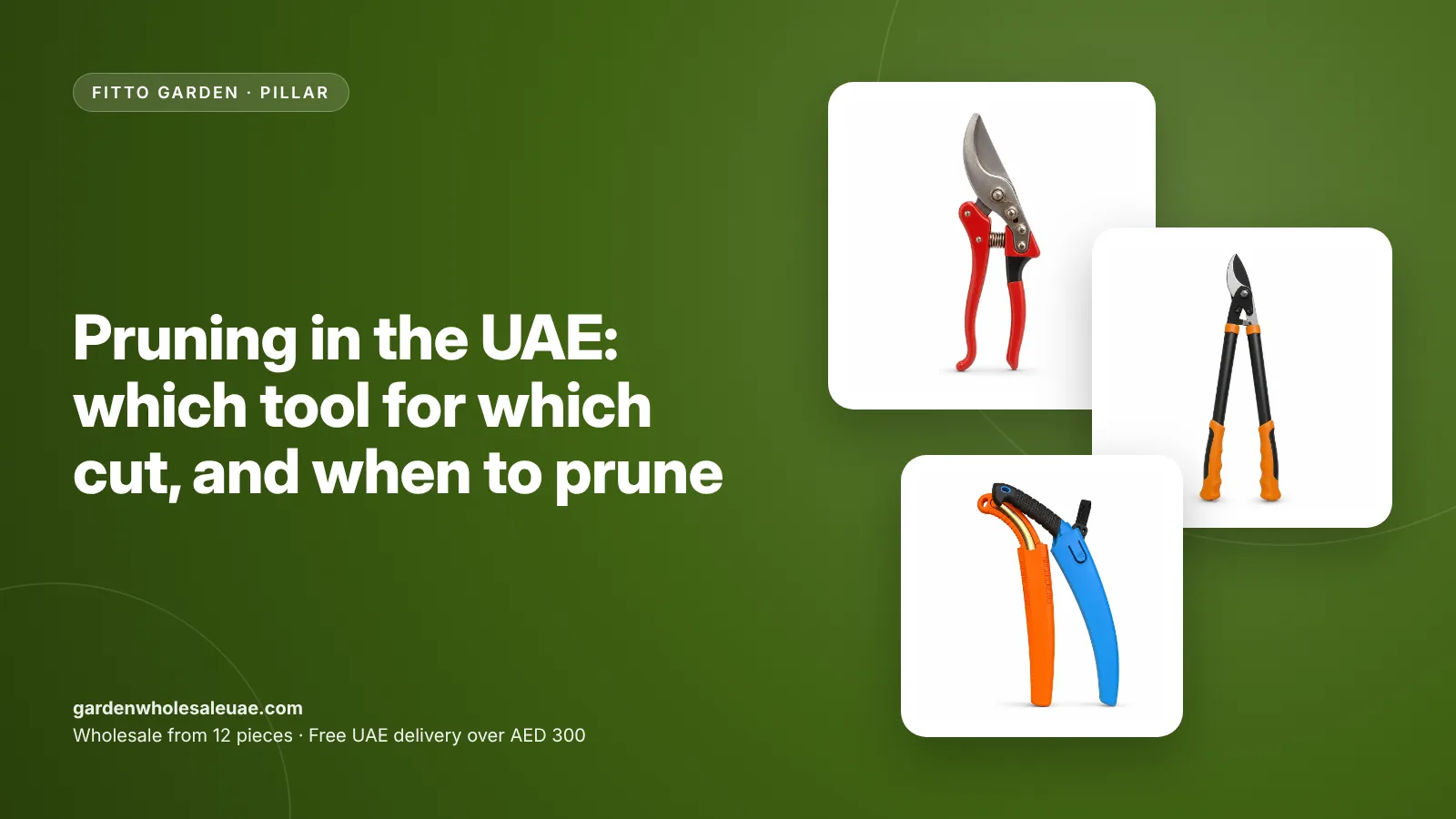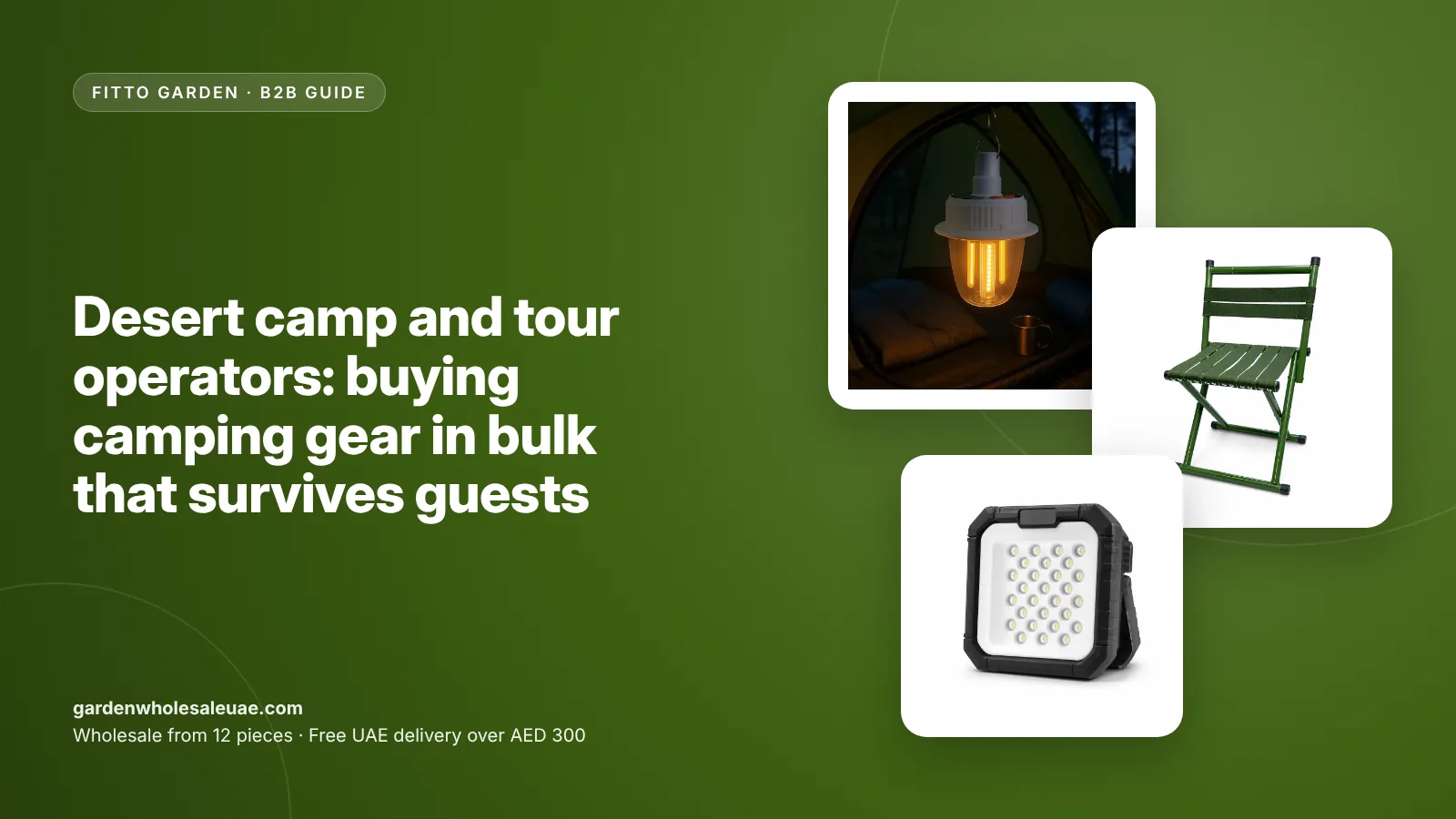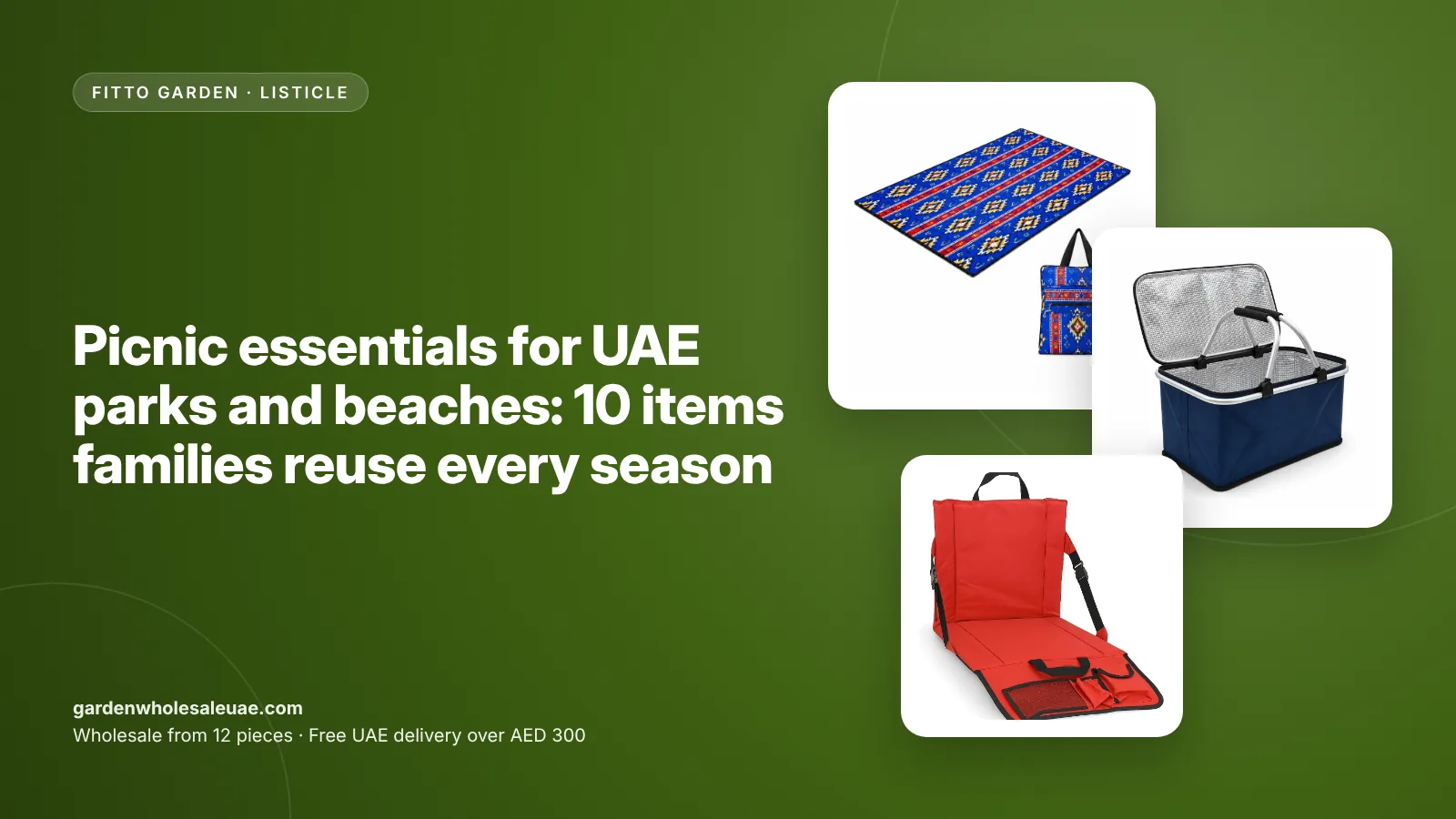
Spade vs shovel: which digging tool does your garden job need?
By FITTO Trade Desk · Last updated 29 October 2026
In the spade vs shovel question, the rule is simple: a spade cuts and a shovel moves. Use a flat, straight-edged spade to edge beds, slice turf and dig straight-sided holes. Use a dished shovel, pointed or square-mouthed, to scoop and throw loose sand, compost and gravel. Most villa gardens and every landscaping crew need one of each.
Key takeaways
- A spade has a flat, straight-edged blade and is pushed in almost vertically; it cuts.
- A shovel has a curved, dished blade held at an angle; it scoops, lifts and throws.
- Edging, turf cutting and planting holes with neat sides are spade jobs.
- Moving sand, compost, gravel and backfill are shovel jobs; a long handle saves your back.
- Product names mix the two words, so judge the blade shape, not the label.
Edge a bed with a pointed shovel and you get a wavy, scalloped line that needs recutting. Move a tonne of sand with a spade and you lose half of every load and an hour of labour.
This comparison is for gardeners, landscapers and shops choosing digging tools. At FITTO Garden, a wholesale gardening tools supplier in the UAE, we sell both blade types, so the table below is built around real jobs rather than catalogue names.
What is the difference between a spade and a shovel?
A spade has a flat, fairly straight blade designed to cut into ground. A shovel (مجرفة) has a wider, dished blade with raised sides designed to carry material.
The difference shows in how each tool is used. You drive a spade down almost vertically with your foot, so it slices soil, roots and turf into clean blocks. You push a shovel in at a low angle, then lift and throw, so the curved blade holds the load.
Catalogues use the two names loosely; our own range includes a "flat spade shovel" and a "pointed garden spade shovel". Judge the blade: flat and square means spade work; dished or pointed means shovel work.
Spade vs shovel: which blade suits which job?
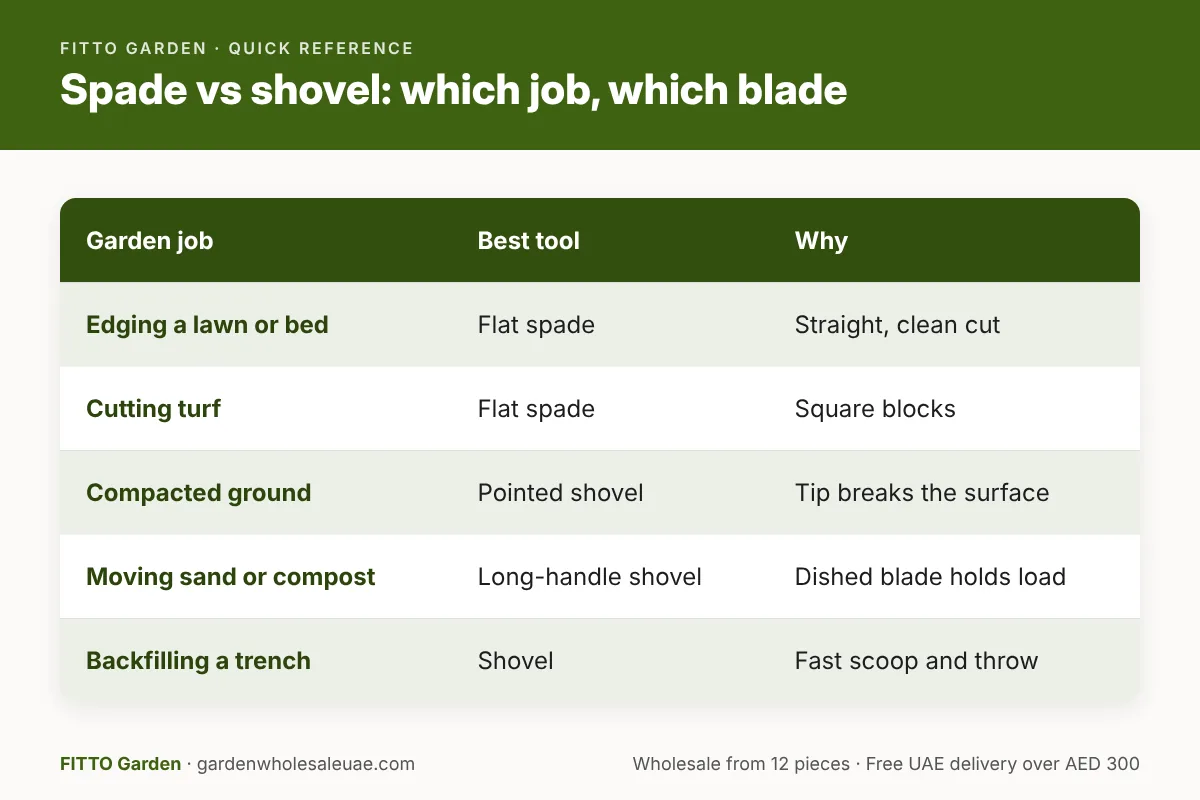
Choose by the job, not the soil alone. Cutting and shaping jobs need a spade; lifting and moving jobs need a shovel. This table covers the tasks UAE gardeners and crews do most.
| Garden job | Best tool | Why | Wrong-tool result |
|---|---|---|---|
| Edging a lawn or bed | Flat spade | Straight edge cuts a clean, vertical line | Pointed shovel leaves a wavy edge |
| Cutting and lifting turf | Flat spade | Slices roots into square blocks | Shovel tears the turf |
| Planting hole with straight sides | Spade | Vertical walls, flat base | Shovel makes a cone-shaped hole |
| Digging into compacted ground | Pointed shovel | Tip concentrates force | Flat spade bounces off |
| Moving sand, compost or gravel | Shovel, long handle | Dished blade holds the load | Spade spills half of it |
| Backfilling a trench or pit | Shovel | Fast scooping and throwing | Spade is slow |
| Dividing clumps and perennials | Spade | Sharp, flat blade chops through roots | Shovel crushes the crown |
When should you use a spade?
Use a spade whenever the result must be neat: edges, turf, straight-sided holes and root cutting. It is the tool that shapes a garden.
The flat spade with a square blade, 72 cm has the straight working edge these jobs need, with a D-handle for a two-handed grip. For raised beds, courtyard planters and tight borders, the compact D-handle garden spade, 60 cm is easier to position.
Good spade technique:
- Stand the blade upright on the line you want to cut.
- Put your foot on the top edge of the blade and press it in to its full depth.
- Rock the handle back slightly to break the soil, then lift the block out.
- For lawn edges, work along a string line or a hose laid on the grass.
When should you use a shovel?
Use a shovel when the job is about volume: moving, mixing and backfilling loose material. It is the tool that shifts a garden.
A pointed shovel also starts holes in hard, compacted ground, where its tip breaks the surface. The D-handle pointed garden shovel, 72 cm suits planting holes in beds. For moving sand and compost, a long handle lets you work upright: the long-handle garden digging shovel, 122 cm and the 120 cm fibreglass-handle shovel are built for that.
Lift safely with a shovel:
- Push the blade in low and level, using your legs rather than your arms.
- Bend your knees, keep the load close and lift with a straight back.
- Turn your feet to throw; do not twist at the waist.
- Take smaller loads of damp sand, which is much heavier than dry sand.
Pointed or square shovel: does the tip matter?
Yes. A pointed tip digs, and a square mouth scoops and scrapes. If you buy only one shovel for a villa garden, a pointed one covers more jobs.
A pointed or round-point shovel enters hard ground and cuts through small roots. A square-mouth shovel carries loose material across flat surfaces such as paving, truck beds and driveways.
In compacted villa soil, many crews loosen the ground first with a long-handle digging fork, 102 cm, then switch to a shovel to lift the spoil. For more on handle lengths and materials in UAE heat, see our guide to garden shovels and spades.
Which should you buy first?
For most villa gardens, buy a pointed D-handle shovel first, then a flat spade once you start edging and shaping beds. Crews need both from day one.
| Buyer | First tool | Second tool | Notes |
|---|---|---|---|
| Apartment or balcony grower | Neither | - | A hand trowel does the work in pots |
| Villa garden, mainly planting | Pointed D-handle shovel | Flat spade for edges | Add a fork for compacted soil |
| Villa garden with lawn | Flat spade | Pointed shovel | The spade keeps lawn edges sharp |
| Landscaping crew | Long-handle shovels | Flat spades | Roughly two shovels per spade for sand-heavy sites |
| Garden shop | Both, side by side | Digging fork | Shoppers compare blades in person |
The crew ratio is a rule of thumb from typical sand-heavy villa sites; adjust it to your own job mix. For a full new-garden kit list, see our essential tools for a new villa garden.
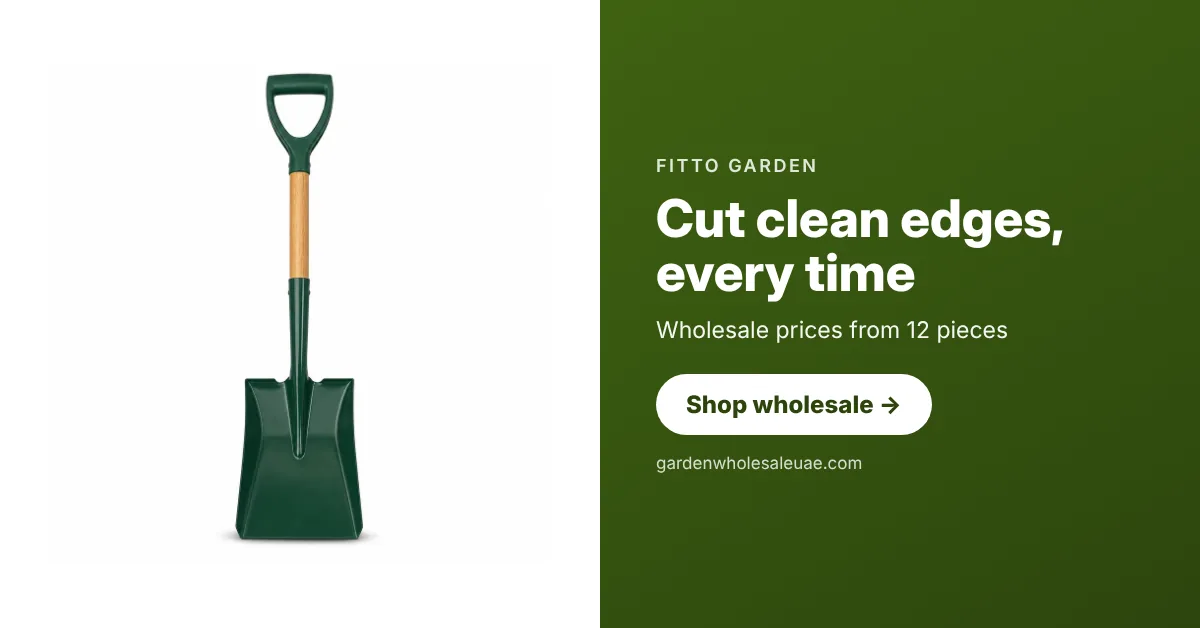
FITTO Trade Pick: A spade and a shovel for every crew Pair the 72 cm flat spade with the 122 cm long-handle digging shovel so each team has a cutting tool and a moving tool. Wholesale prices start from 12 pieces, and mixed cartons are available on request, so you can split one order across both blades.
The bottom line
A spade cuts and shapes; a shovel scoops and moves. Match the blade to the job, not the name on the label, and you get cleaner edges, faster sand work and fewer sore backs.
Browse our wholesale gardening tools range, request a quote for your crew or shop, or order a sample to compare blades first. Delivery is free across all seven emirates over AED 300, and our team is on WhatsApp at +971 55 672 6947. FITTO Garden: fit for the way you grow.
FAQ
Can I use a shovel instead of a spade?+
For rough digging, yes, but the results differ. A shovel leaves cone-shaped holes and wavy edges because its blade is curved and often pointed. For lawn edges, turf lifting and holes with straight sides, a flat spade does the job faster and neater.
Is a spade or a shovel better for sandy UAE soil?+
Loose sand is a shovel job, because the dished blade holds the load and a long handle lets you work upright. A spade struggles to carry dry sand, which slides off its flat blade. Where sandy plots have been topped with imported soil for beds, a spade is still the best tool for edges and straight-sided planting holes.
What is a D-handle, and is it better than a long handle?+
A D-handle is a closed grip at the top of a shorter shaft, usually 60-80 cm overall. It gives control for precise work such as edging, planting and working near irrigation lines. A long, straight handle of around 120 cm gives more leverage and lets you stand upright, which suits moving sand and backfilling. Spades usually have D-handles; volume shovels usually have long handles.
How deep does a spade dig in one push?+
One push drives the blade roughly its own length into the ground, which gardeners call one "spit". On most garden spades that is about 25 cm, as a rule of thumb. Check the blade length on each product before you plan a job, and expect less depth in compacted or stony soil.
Should I sharpen a spade or a shovel?+
Yes, especially a spade. A sharp edge slices roots and turf cleanly, while a dull one crushes and tears them. Run a flat file along the edge at its existing angle a few times each season, working from the top face. Clean off soil first, and wear gloves while you file.