Plant pots and planters in the UAE: sizes, materials and care that keep plants alive
By FITTO Trade Desk · Last updated 29 October 2026
Plant pots in the UAE keep plants alive when they have drainage holes, the right size and a colour that suits the spot. Choose a pot 2–5 cm wider than the root ball, use light colours in direct sun, add a saucer indoors and feed during the growing season. Plastic pots are light and affordable; clay suits shaded spots.
Key takeaways
- Drainage holes matter more than material: a pot without them drowns roots, indoors or out.
- Repot into a pot only 2–5 cm wider than the current one; oversized pots hold wet soil and rot roots.
- In outdoor sun, light-coloured pots stay cooler than black ones and protect roots from overheating.
- For resellers, a core of 15–25 cm pots plus 35–40 cm floor planters and matching saucers covers most plants customers bring in.
Most plants that die in UAE pots do not die from lack of care. They die from the wrong pot. A black planter on a south-facing balcony bakes the roots in July, and a pretty pot with no drainage hole drowns an office plant under the AC. Each loss means a replaced plant, an unhappy customer or a bare café corner. This guide explains pot size, material, drainage and feeding for outdoor heat and indoor air conditioning, so plants survive.
It is written for plant shops, cafés, offices and apartment gardeners. At FITTO Garden, a wholesale planters and plant care supplier in the UAE, we supply plastic plant pots (أصص النباتات), saucers, planters and plant feeds to shops, cafés and offices. The advice below is the same we give a reseller planning a pot range or a café planting a terrace.
What size plant pot do you need?
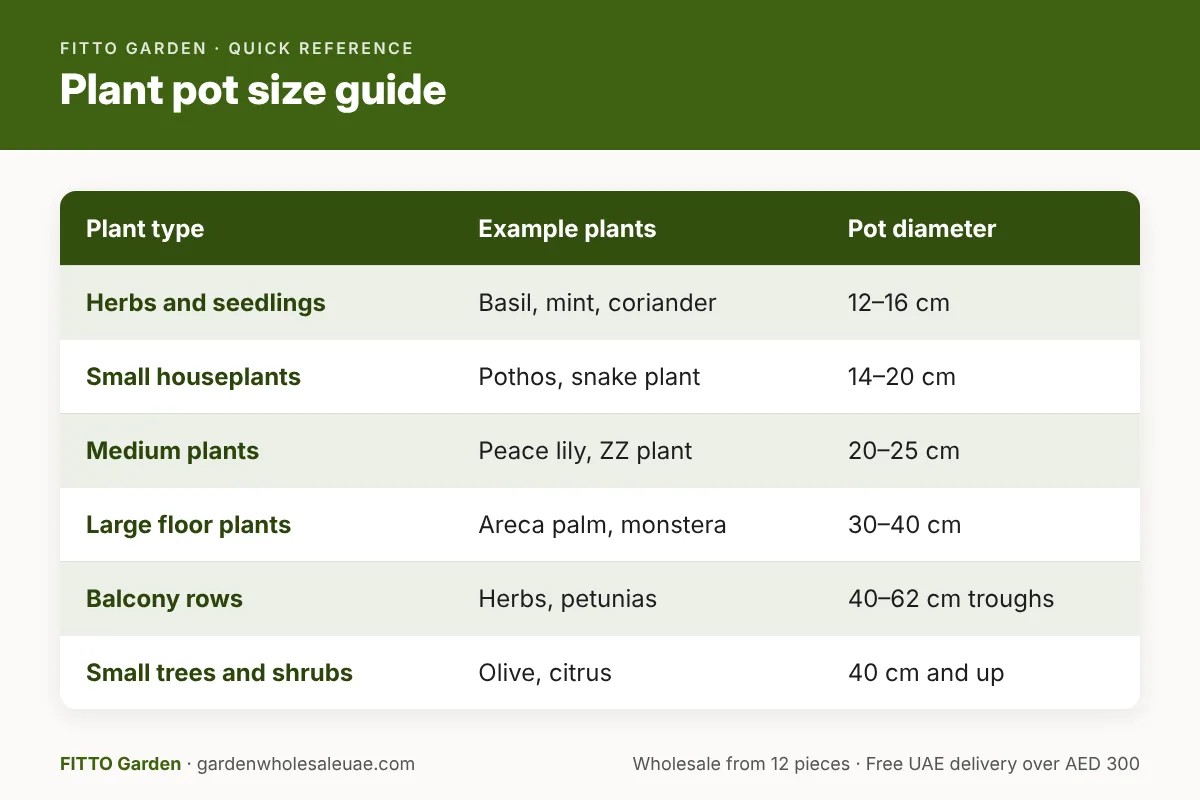
As a rule of thumb, choose a plant pot about 2–5 cm wider than the root ball for small and medium plants, and up to about 5–8 cm wider for large floor plants. A pot that is too big holds wet soil around the roots, which is a common cause of root rot indoors.
Use this guide as a starting point:
| Plant type | Example plants | Pot diameter |
|---|---|---|
| Herbs and seedlings | Basil, mint, coriander, seedlings | 12–16 cm |
| Small houseplants | Pothos, snake plant, succulents | 14–20 cm |
| Medium plants | Peace lily, ZZ plant, small ferns | 20–25 cm |
| Large floor plants | Areca palm, fiddle-leaf fig, monstera | 30–40 cm |
| Balcony rows | Herbs, petunias, trailing plants | 40–62 cm troughs |
| Small trees and shrubs | Olive, citrus, bougainvillea | 40 cm and up |
Depth matters too. Tall cylinder planters around 45–50 cm suit plants with long roots and make a floor plant look taller in an office. Shallow bowl planters suit succulents and cacti, which have shallow roots and need fast drying.
When you repot, move up one size only. Repot in the cooler months from October to March, so the plant settles before summer stress begins.
Which material makes the best plant pots in the UAE?
Plastic plant pots work best for most UAE uses because they are light, affordable and hold moisture longer in heat. Clay (terracotta) pots breathe and dry faster, which suits succulents but means more watering in summer. Glazed ceramic looks premium indoors but is heavy and breaks easily.
| Material | Moisture | Weight | Heat behaviour | Best use |
|---|---|---|---|---|
| Plastic | Holds water longer | Light | Light colours stay cooler | Most indoor and balcony plants, resale |
| Clay / terracotta | Dries fast, breathes | Heavy | Cools by evaporation | Succulents, herbs in shade |
| Glazed ceramic | Holds water | Heavy | Can heat up in sun | Decorative indoor spots |
| Fibreglass or concrete-look | Holds water | Medium to heavy | Thick walls insulate | Large outdoor statement planters |
For resellers, plastic plant pots are the volume line. They stack, travel without breakage and come in sizes from about 12 cm to 40 cm. Terracotta-colour plastic gives the clay look without the weight, which suits balconies with load limits and high-rise apartments.
Rattan-effect and textured plastic pots add a decorative finish for cafés and living rooms without the cost of ceramic.
How does UAE heat affect plants in pots?
UAE heat affects potted plants more than plants in the ground, because the pot wall heats up and the small volume of soil dries quickly. In summer, a pot in full afternoon sun can dry out within a day.
Protect potted plants outdoors with these steps:
- Choose white, beige, grey or terracotta-colour pots for sunny spots; dark pots absorb more heat.
- Group pots together so they shade each other's sides.
- Move pots into afternoon shade from June to September where you can.
- Cover the soil surface with pebbles or decorative gravel to slow evaporation.
- Use a bigger pot for thirsty plants in full sun, since more soil holds more water.
Double-potting also helps: place a plastic grower pot inside a slightly larger decorative pot. The air gap insulates the roots.
Balcony railing planters and wall-hanging bucket planters dry fastest of all, because air moves around them. Water them more often and choose heat-tolerant plants such as portulaca, bougainvillea or succulents. For watering methods and timings, see our guide to garden watering in UAE heat.
Why do drainage holes and saucers matter?
Drainage holes let excess water escape so roots can breathe. Without them, water collects at the bottom of the pot and the roots rot, even if the top of the soil looks dry.
Every plant pot should have at least one drainage hole. A matching saucer or drip tray catches the water indoors and protects floors, desks and café tables. Empty the saucer about 30 minutes after watering, so the pot does not sit in water.
If a decorative pot has no hole, use it as an outer cover only. Keep the plant in a plastic pot with holes inside it, and lift it out to water.
For long balcony troughs, choose planters with a matching drainage tray. A 60 cm rectangular planter with its own tray keeps water off the balcony floor and away from the neighbours below.
What potting mix should go in UAE plant pots?
Use a ready-made potting mix with compost, not garden sand alone. Local sand drains almost instantly and holds few nutrients, so potted plants in pure sand dry out and go hungry.
Match the mix to the plant:
- Houseplants and flowers: general potting mix with compost.
- Succulents and cacti: potting mix with extra perlite or coarse sand for faster drainage.
- Vegetables and herbs: potting mix enriched with compost or a natural fertiliser.
Skip the old habit of adding a layer of gravel at the bottom of the pot. It does not improve drainage and can keep the root zone wetter. Put pebbles on top of the soil instead, where they slow evaporation and look finished.
How should you care for plants in AC offices and cafés?
Plants in air-conditioned offices and cafés need less water than outdoor plants, more light than they usually get, and regular leaf cleaning. Overwatering is the most common problem indoors.
- Water less often. Check the soil 3–5 cm down and water only when dry.
- Find the light. Place plants within a few metres of a window, out of direct AC airflow.
- Clean the leaves. Fine dust settles on leaves quickly in the UAE. Wipe them, or use a leaf cleanser spray, every few weeks.
- Turn the pot. Rotate it a quarter turn each month so the plant grows evenly.
Cold air blowing straight from an AC vent dries and browns leaves. Move plants at least a metre away from vents.
How do you feed potted plants in the UAE?
Feed potted plants during their growing season, usually October to April for most outdoor plants, with a balanced fertiliser. Potting mix runs low on nutrients within months, and every watering flushes some away through the drainage holes.
Choose the format that suits the user:
- Slow-release granules: sprinkled on the soil and watered in, so you feed less often. Low effort, good for offices and busy households.
- Liquid fertiliser: added to the watering can every few weeks at the label dose. Quick to act and easy to adjust.
- Ready-to-use sprays: convenient for flowering plants, roses and small collections.
- Iron supplements: designed for yellow leaves with green veins, a common sign of iron shortage in alkaline UAE soil and water.
- Natural and neem-based feeds: suit vegetable and herb growers who prefer natural options.
Follow the dose on the pack. More fertiliser is not better, and too much can burn roots, especially in hot weather. Reduce feeding in the peak summer months, when many plants slow down. Store feeds closed, dry and out of reach of children and pets.
Which planters suit cafés, offices and hotel lobbies?
Cafés, offices and hotel lobbies need planters that look tidy, protect floors and are easy for staff to maintain. Large plastic planters with saucers, tall cylinders and matching troughs do this without the weight of ceramic.
Plan commercial planting in four steps:
- Count the spots: entrance, reception, window line, seating corners and terraces.
- Choose one pot style and two or three colours for the whole site, so it looks planned.
- Size each planter to the plant and the space, usually 35–40 cm for floor plants and 40–62 cm troughs for window lines.
- Add saucers or trays under every indoor pot to protect flooring and carpets.
Keep a few spare pots of each size in the store room. When a plant fails, staff can replace it the same day, and the display stays consistent. Outdoor café terraces need the heat rules above: light colours, grouped pots and afternoon shade in summer.
For terraces facing the sea, choose plastic or fibreglass over metal containers. Salt air marks and rusts metal quickly.
Which pot sizes and colours should resellers stock?
Resellers should stock pots by size first and colour second. The 15–25 cm range covers most houseplants and herbs, while 35–40 cm planters serve offices, cafés and floor plants. Matching saucers go with nearly every pot.
A practical starter range:
- Stock three core sizes: about 15, 20 and 25 cm.
- Add one large size, 35 or 40 cm, for floor plants.
- Choose neutral colours first: white, black, grey and terracotta.
- Add one or two accent colours for impulse buys.
- Keep matching saucers for every pot size.
- Add balcony troughs and railing planters before the October planting season.
Stackable pots save shelf and storage space, which matters for small shops paying Dubai rents. Our guide to plastic plant pots wholesale goes deeper on range planning and colours.
Track sell-through by size for the first season before widening the colour range. Core sizes in white and terracotta are the safest place to start.
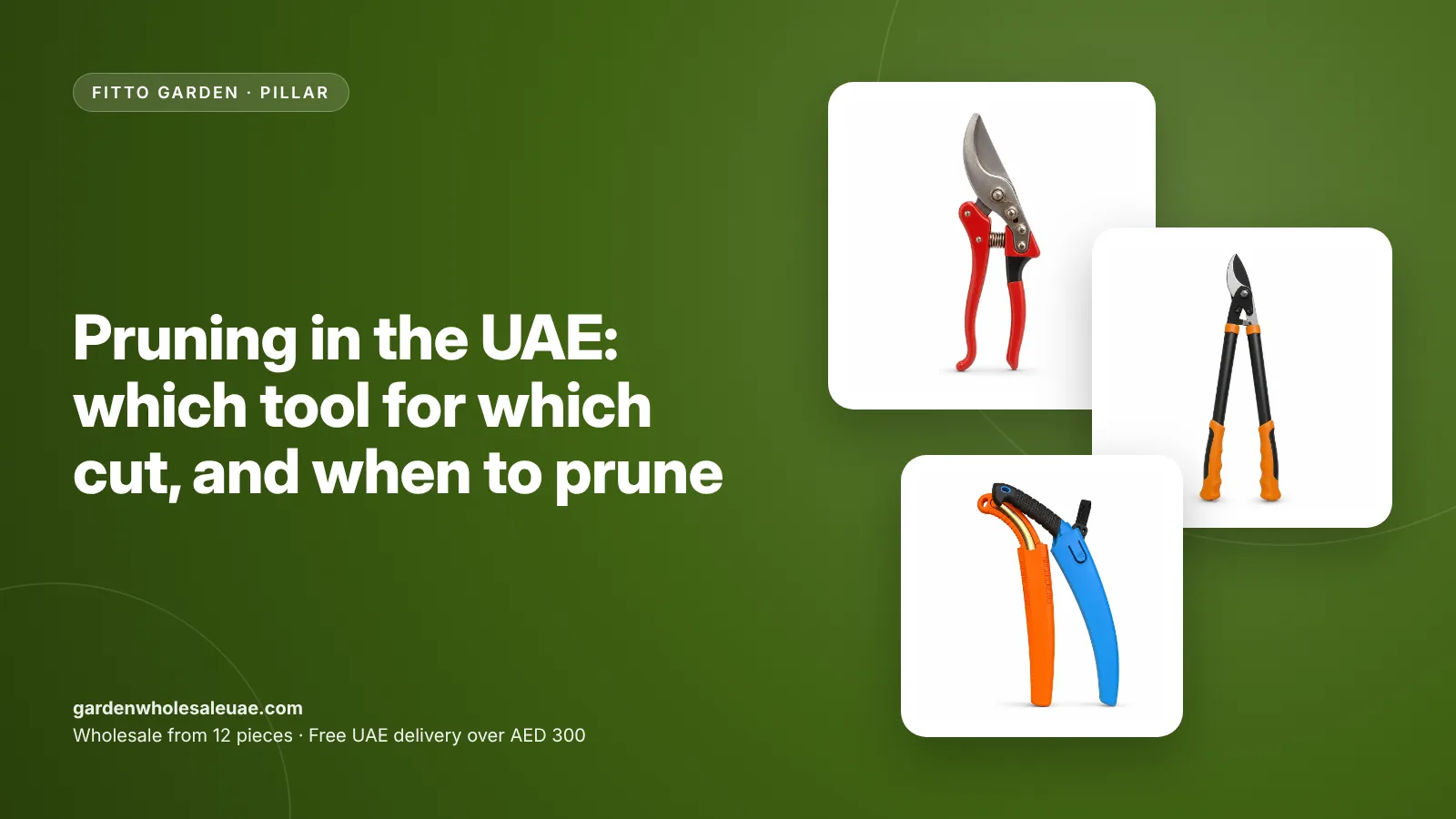
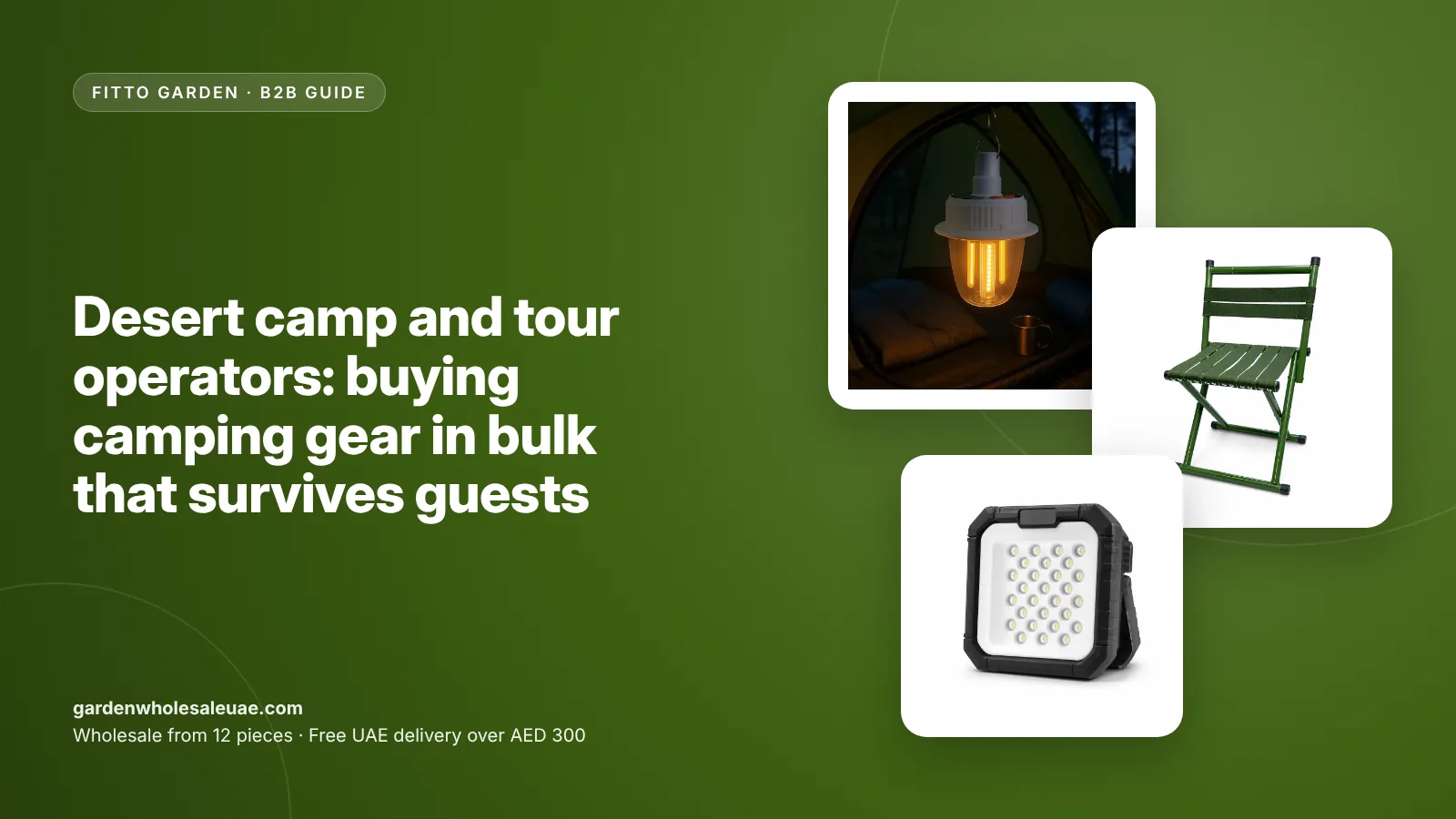
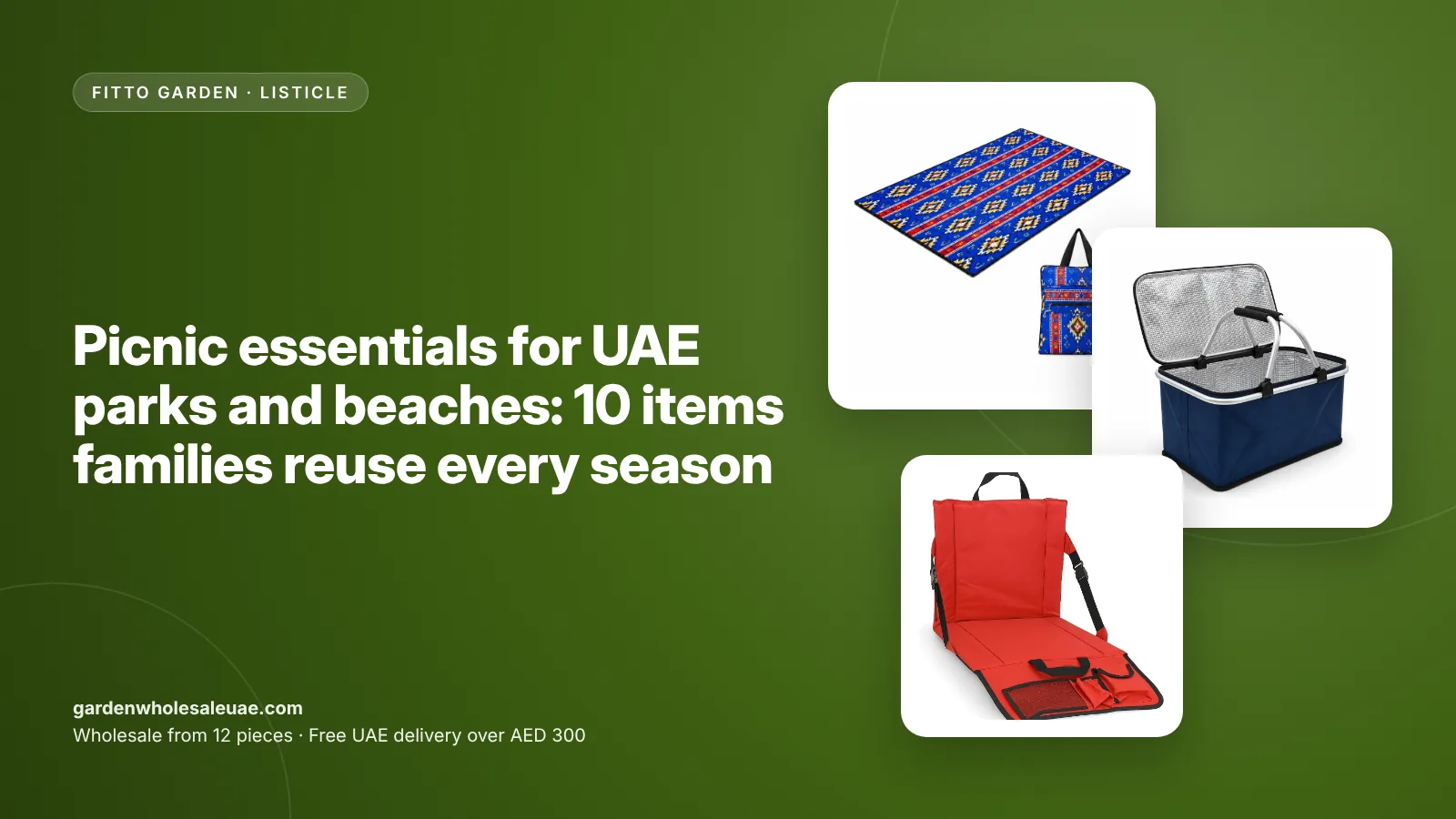
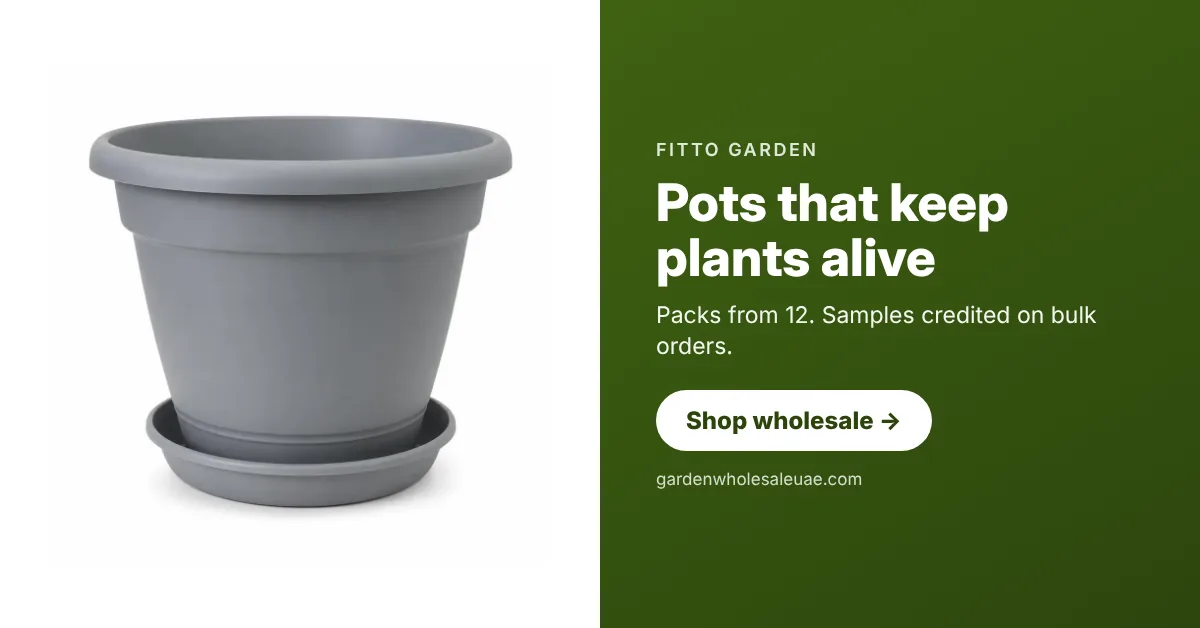
FITTO Trade Pick: Pots that keep plants alive Our 35 cm round planter with saucer, 60 cm rectangular planter with drainage tray, slow-release granular plant fertiliser and white decorative gravel cover potting, drainage, feeding and finish, in wholesale packs from 12 pieces. Not sure which colour sells? Order a sample at the single-piece price; we credit its cost on a bulk order of AED 2,000+ within 30 days.
When is the best time to repot and plant in the UAE?
The best time to repot and plant in the UAE is from October to March, when temperatures are mild and plants recover quickly. Avoid repotting in June to August, when heat stress adds to transplant shock.
- Water the plant the day before repotting.
- Choose a new pot one size up, with drainage holes.
- Add fresh potting mix, not garden sand alone.
- Set the plant at the same depth it grew before.
- Water well and keep it in light shade for a week.
The cool season is also when vegetable and herb pots do best. Our winter planting guide for the UAE covers what to sow from November.
The bottom line
Plant pots in the UAE keep plants alive when they drain well, fit the root ball and suit the light and heat of their spot. Choose plastic for most uses, light colours for sun and saucers for indoors. Feed during the growing season and repot in the cool months.
Stock or refresh your pots and plant care in one order. Browse our wholesale planters and plant care range, request a quote for mixed sizes and colours, order a sample first, or WhatsApp the Trade Desk on +971 55 672 6947. Delivery is free to all seven emirates on orders over AED 300. FITTO Garden: fit for the way you grow.
FAQ
Are plastic plant pots good for UAE heat?+
Plastic plant pots are good for UAE heat when you choose light colours and keep them out of harsh afternoon sun in summer. They hold moisture longer than clay, so plants need water less often. Dark plastic pots in full sun can overheat roots. Pebbles on the soil surface and grouping pots together give extra protection.
Do all plant pots need drainage holes?+
Yes, every pot that holds a plant directly needs at least one drainage hole. Without one, water collects at the bottom and roots rot. Decorative pots without holes can still be used as outer covers. Keep the plant in a plastic pot with holes inside, and lift it out to water and drain.
How often should I water potted plants in Dubai?+
Potted plants in Dubai may need water daily in summer if they sit outdoors in sun, and every few days to weekly indoors under AC. Always check the soil 3–5 cm down before watering. Water until a little drains from the holes, then empty the saucer after about 30 minutes. Adjust as the seasons change.
What size pot should I buy for a floor plant?+
A floor plant such as an areca palm, monstera or fiddle-leaf fig usually needs a 30–40 cm pot. Choose a pot about 5–8 cm wider than the current root ball, not more. A tall cylinder planter of 45–50 cm makes a plant look taller and suits office and café corners. Always add a matching saucer indoors.
Why are my potted plant's leaves turning yellow?+
Yellow leaves on potted plants in the UAE usually come from overwatering, poor drainage or a nutrient shortage. Check that the pot drains and the saucer is empty. If new leaves are yellow with green veins, the plant may lack iron, which is common in alkaline soil and water. An iron supplement may help.