Decorative pebbles and stones for pots: 8 ways to use them indoors and out
By FITTO Trade Desk · Last updated 29 October 2026
Decorative pebbles for plants work best as a top dressing, a pebble tray, a riser inside cover pots, and a mulch for sun-baked balcony pots. As a rule of thumb, a 20 cm pot needs about 0.6 litres of stones for a 2 cm layer. Never use them as a drainage layer inside the pot.
Key takeaways
- A 1-3 cm layer of stones on top of the soil tidies pots, stops soil splashing and slows surface drying.
- Volume needed = pot area x depth: about 0.6 litres for a 20 cm pot and 2.5 litres for a 40 cm pot at 2 cm.
- A gravel layer at the bottom of a pot does not improve drainage; drainage holes do.
- Pale stones stay cooler in UAE sun than dark ones, but keep all stones a few centimetres from stems.
- Stones hide dry soil, so check moisture underneath before you water.
Bare soil makes a healthy plant look unfinished, splashes onto floors when watered and bakes into a crust in the heat. In offices and cafés, customers notice.
This list is for offices, cafés and home gardeners. At FITTO Garden, a wholesale planters and plant care supplier in the UAE, we stock four kinds of decorative stone (حصى زينة). Each use below names the one that suits it.
How we chose: we picked uses that solve a real problem (mess, heat, overwatering or display) and skipped pure crafts. Quantities are calculated from pot size.
How many decorative pebbles for plants does each pot need?
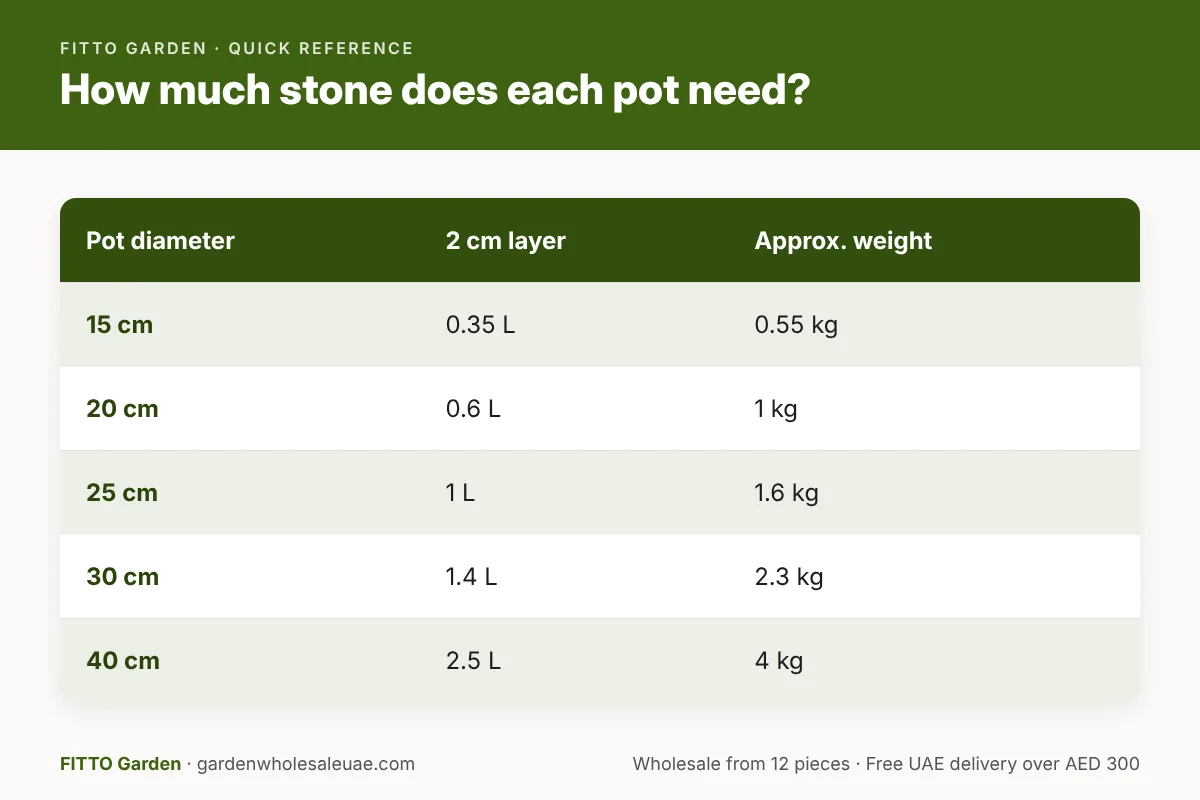
Multiply the soil area by the depth you want. A 2 cm layer needs roughly 0.35 litres for a 15 cm pot, 1 litre for a 25 cm pot and 2.5 litres for a 40 cm pot. Measure by volume, because bag sizes vary.
| Pot diameter | Stones for a 2 cm layer | Stones for a 3 cm layer | Approx. weight at 2 cm |
|---|---|---|---|
| 12 cm | 0.25 L | 0.35 L | 0.4 kg |
| 15 cm | 0.35 L | 0.55 L | 0.55 kg |
| 20 cm | 0.6 L | 0.95 L | 1 kg |
| 25 cm | 1 L | 1.5 L | 1.6 kg |
| 30 cm | 1.4 L | 2.1 L | 2.3 kg |
| 35 cm | 1.9 L | 2.9 L | 3.1 kg |
| 40 cm | 2.5 L | 3.8 L | 4 kg |
Figures use the rim diameter, so they round slightly up. Weights assume loose stone at about 1.6 kg per litre, a rule of thumb. For a 40 x 18 cm balcony trough, allow about 1.5 litres at 2 cm.
1. Top dressing for indoor pots
A top layer of stones makes a pot look finished and stops soil splashing out when you water. It is the most common use, and the most useful in offices.
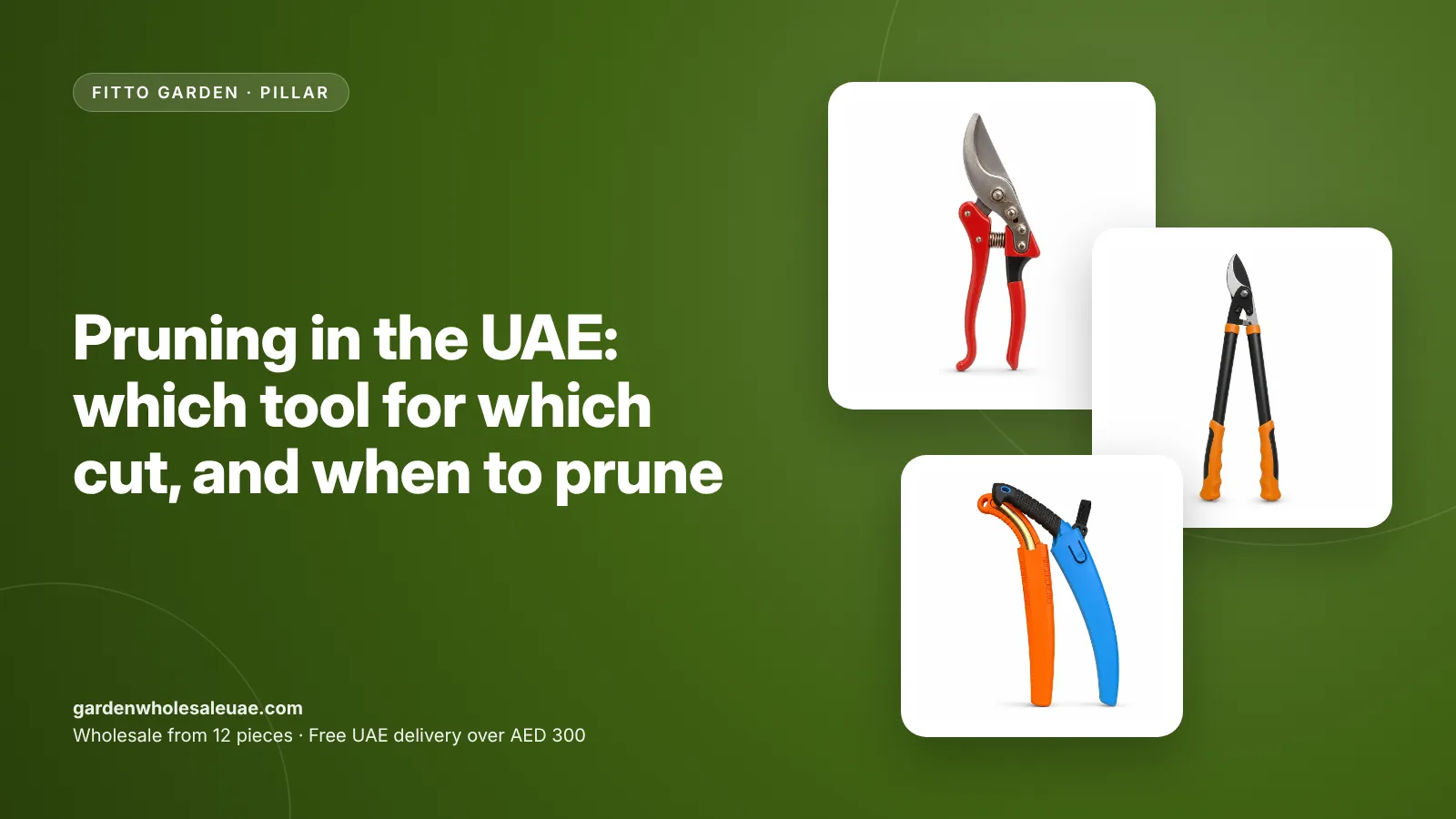
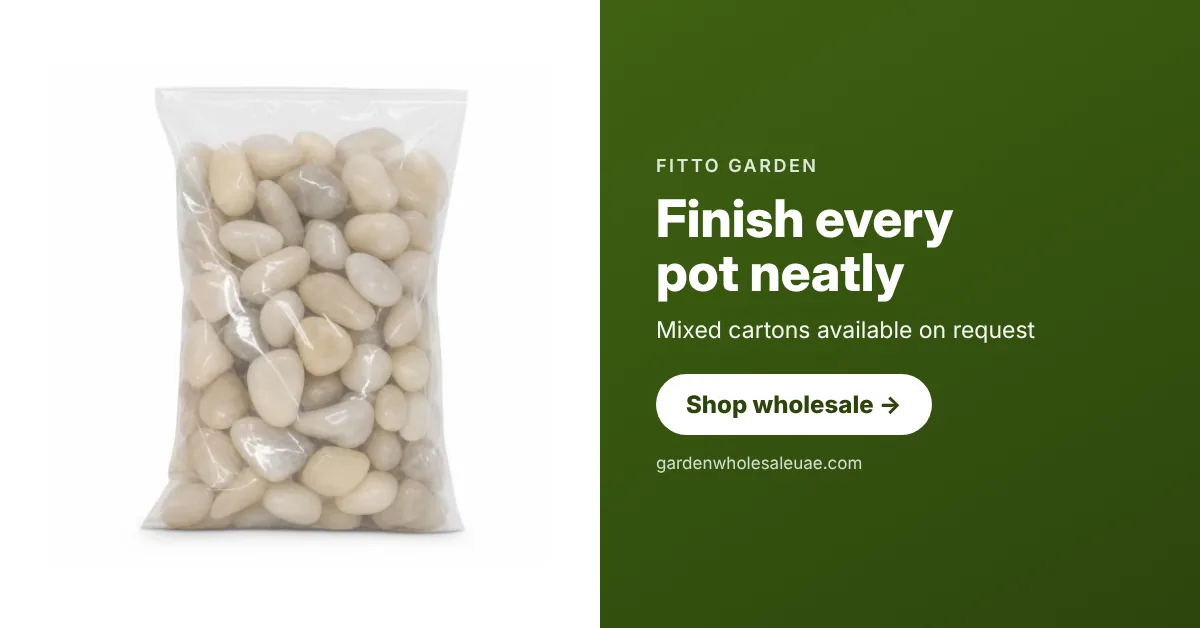
The polished cream and beige pebbles suit reception desks and meeting rooms. A dry stone surface can also make pots less inviting to fungus gnats, which breed in damp top soil.
The trade-off: stones hide the soil, so you cannot see when it is dry. Push a finger under the layer before watering. Our list of common plant watering mistakes in the UAE explains why that check matters.
2. A dry collar for succulents and cacti
Stones keep the base of a succulent's stem dry, which helps prevent rot where the stem meets the soil. They also suit the mineral look of these plants.
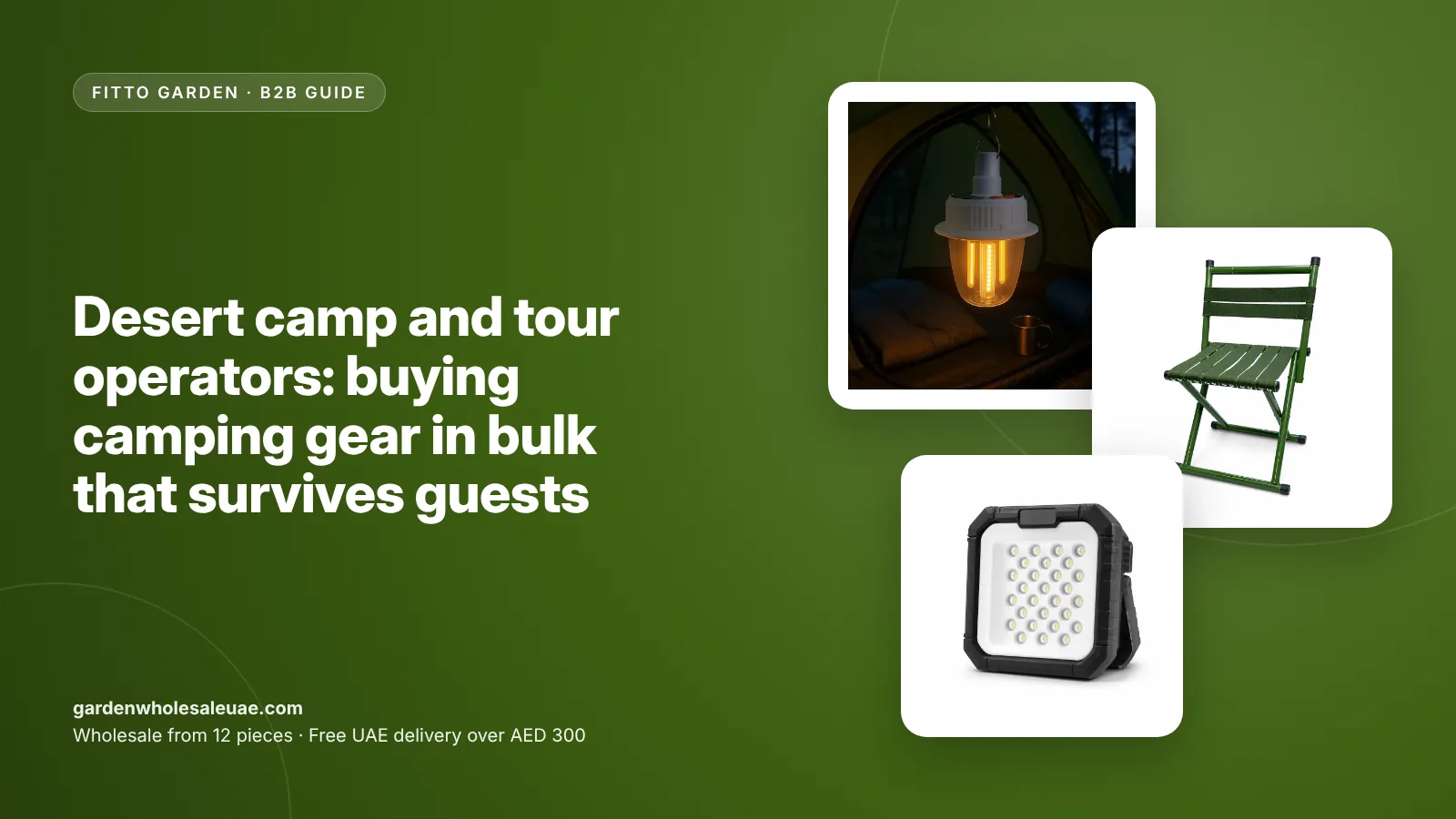
The white decorative gravel stones suit succulents. Use a 1-2 cm layer over a gritty, free-draining mix.
3. A pebble tray for humidity-loving plants
A saucer filled with stones and water lifts a pot above the water while raising humidity slightly around the leaves. Ferns and calatheas in air-conditioned rooms benefit most.
- Choose a saucer at least 5 cm wider than the pot base, such as the 25 cm dark green saucer, which is about 3 cm deep.
- Fill it with a 2-3 cm layer of pebbles.
- Add water until it sits just below the top of the stones.
- Stand the pot on the stones so its base stays out of the water.
The humidity boost is small and local; the bigger benefit is that the pot never sits in drained water.
4. A riser inside a decorative cover pot
Put a layer of stones in the bottom of a cover pot, not the plant pot, so the plant sits above any drained water. This is the correct version of the "stones for drainage" idea.
Many offices keep plants in plastic pots, such as an 18 cm nursery pot, inside a decorative cover pot with no hole. A 2-3 cm stone layer under the inner pot keeps its roots out of standing water.
Inside the growing pot itself, skip the gravel layer. Water does not drain freely from fine soil into coarse stone, so the soil above stays wetter. Use pots with drainage holes, as covered in our guide to repotting a plant without shock.
5. Rooting cuttings and holding stems in vases
Pebbles in a glass vase hold cuttings and stems upright and hide their bases. Pothos cuttings root well this way.
Use rinsed polished pebbles here. Dyed stones can tint water over time, so keep them for dry displays.
6. Terrariums and table centrepieces
A stone base adds weight and structure to terrariums, bowls and café table displays.
The multicolour decorative pebbles suit children's areas, events and playful café themes. These are decorative products, not toys, so keep bowls out of reach of small children.
7. Mulch for balcony and terrace pots in UAE heat
A stone layer slows evaporation from the soil surface and stops wind blowing dry soil off balcony pots.
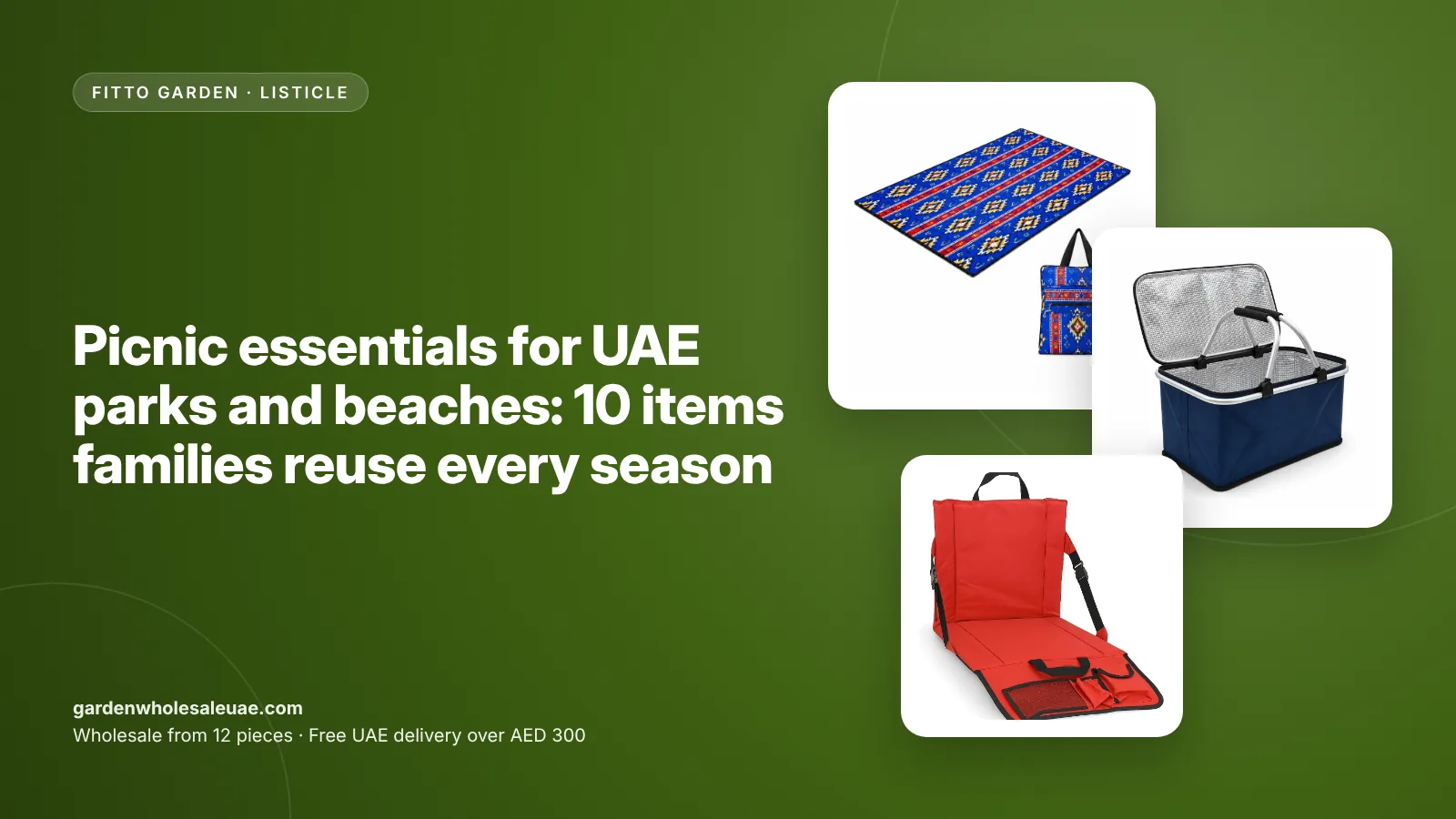
Colour matters outdoors. The brown and grey decorative stones blend with terracotta, but dark stones absorb more heat in full sun. Pale stones stay cooler yet reflect glare onto leaves. Either way, leave a 2-3 cm gap around stems in summer.
For plants that cope with the heat, see our heat-tolerant balcony plants for the UAE.
8. Ballast and edging on windy balconies
A heavy stone layer helps steady light plastic pots, and a line of stones edges a planter or bed neatly. It suits high-rise balconies exposed to strong winds.
A 3 cm layer on a 35 cm pot adds roughly 4-5 kg. For tall, top-heavy plants, put weight low in a cover pot instead.
Which stone suits which use?
| FITTO stone | Look | Best uses |
|---|---|---|
| Polished pebbles, cream and beige | Smooth, rounded, neutral | Office pots, vases, pebble trays |
| White decorative gravel | Rough, bright white | Succulents, modern planters |
| Brown and grey stones | Rough, earthy | Terracotta pots, outdoor mulch |
| Multicolour pebbles | Dyed, bright mix | Events, children's areas, dry displays |
FITTO Trade Pick: Two stones that cover most pots Stock the polished cream and beige pebbles for indoor displays and the white decorative gravel for succulents and modern planters. Mixed cartons are available on request, and wholesale prices start from 12 pieces.
The bottom line
Use stones on top of the soil, in pebble trays and under inner pots, never as a drainage layer inside the growing pot. Measure by volume, and choose pale stones where pots sit in full sun.
Browse our wholesale planters and plant care range, request a quote for your office, café or shop, or order a sample to see the stones in person. Delivery is free across all seven emirates over AED 300, and our team is on WhatsApp at +971 55 672 6947. FITTO Garden: fit for the way you grow.
FAQ
Do decorative pebbles help drainage?+
Not when placed at the bottom of a pot. Water does not move freely from fine potting mix into coarse stone, so the soil above stays wetter for longer. Good drainage comes from drainage holes and a free-draining mix. Pebbles help drainage only in a cover pot, where they lift the inner pot clear of drained water.
How deep should a pebble top dressing be?+
Aim for 1-2 cm with small gravel and 2-3 cm with larger pebbles, enough to hide the soil completely. As a rule of thumb, lay the stones at least one and a half stones deep. Deeper layers add weight without much benefit and make it harder to check the soil moisture underneath.
How do I clean decorative stones?+
Lift them off the pot into a sieve or bucket and rinse with clean water. For the white mineral crust that tap water and fertiliser leave, soak them in water with a little white vinegar, then rinse well. Clean top dressings every few months.
Are white stones a good idea for outdoor pots in the UAE?+
They are a reasonable choice. White and pale stones absorb less heat than dark ones, which helps in summer sun. The downside is glare, which can reflect heat onto low leaves. Keep the layer thin, leave a gap around stems and water early in the morning.